Raising and erasing spirits

Seeing as I had not been able to get a booking at my first coaching inn in my last minute decision to follow up on my theory of the three days’ trip to Canterbury, I thought it was just going to be an ordinary “late room” that I was going to be staying in that night in the little village of Charlton slightly further to the east of Greenwich.

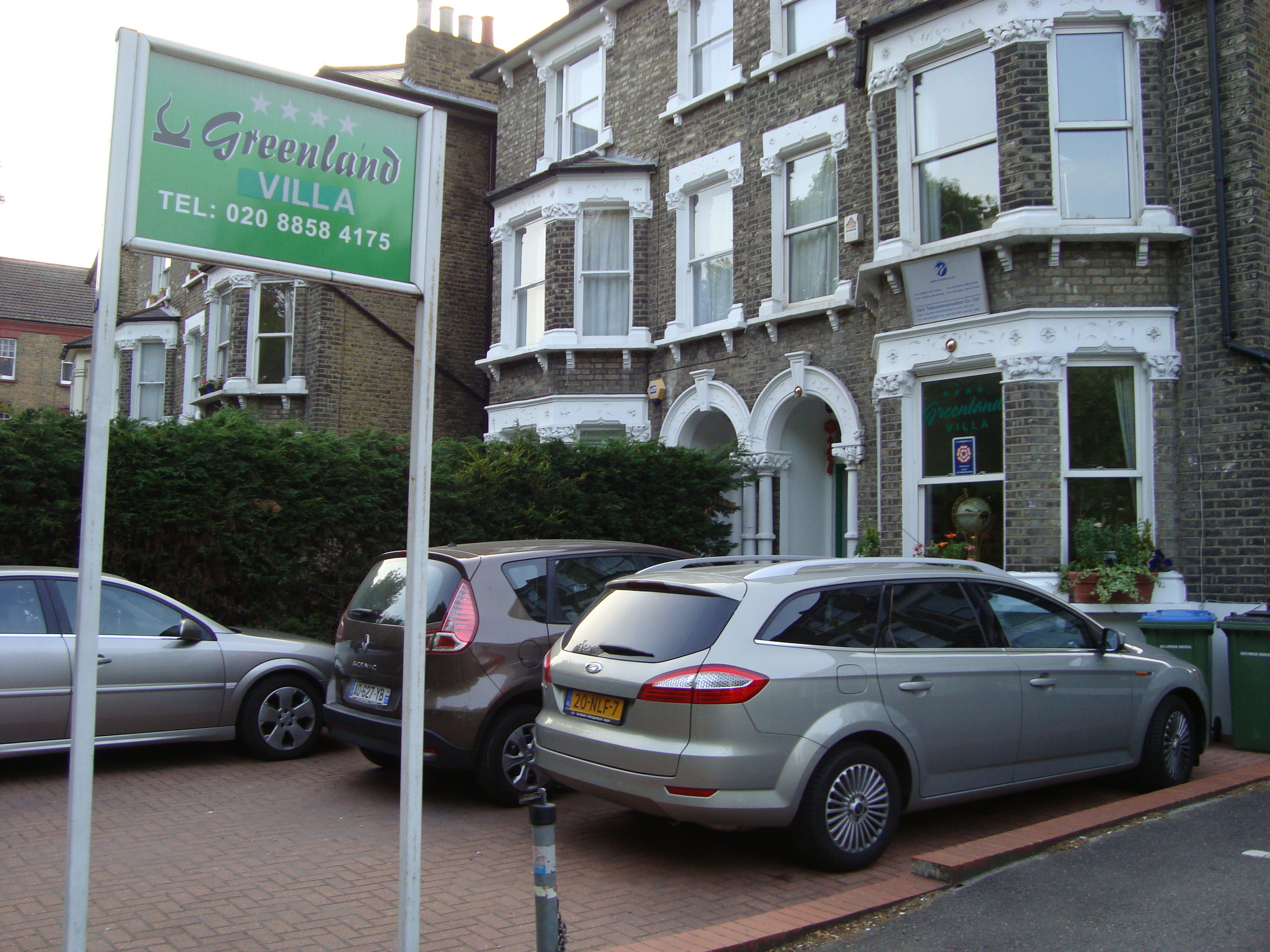
Greenland Villa - first stop along The Way. Looked like a regular B & B to start with...

Having found my way there by Matt Nav – which is what I had renamed Google Maps on my iPhone to be in taking a selection of double deckers all the way from West London (and, OK if you really must know, the 36 to New Cross Gate, then the 122 to Greenwich and finally – after experimenting, a less interesting story in itself – the 286 to Charlton), I found myself outside the door of a house that appeared to be a mix of a bed and breakfast (or “B ‘n B” as they shorten it to here) and a small hotel. Maybe that’s why the owner had branded it as being “a villa”.

Still, when I came to knock on the door I immediately recognised a sign that marked it as being something more than that – and more in line with what liked or looked for by the other type of people that I had met back in 1991 on the road to Glastonbury, Tintagel and the site at Cadbury that is believed to possibly be “Camelot”.

Getting ready to knock on Heaven's Door

That sign was a red tassled ornament at the top of the door, one I had seen on the doors of places I had stayed in when travelling through South East Asia in 1993, as well as got to know something about from mystical people I came to know when I finally got back in 1995 to what may now be my second home of Sydney, Australia.  

An feng shui ornament that says: "Evil Spirits beware - do not enter here!"

The next marker to it being no ordinary UK establishment was the display of different shrines in the reception area

First Shrine along The Way

 The third thing was the good lady owner herself, who immediately regaled me about having just had a Tarot card reading by her housekeeper as a way to gauge whether her fortune, in dealing with a difficult law suit, was likely to change.  For it turned out that besides being the landlady of the establishment, Leeli is a lawyer – as well as an ex-model to boot. 

Leeli, the lawyer and landlady, on the lounge suite in the reception at Greenland Villa

Now I wonder what Chaucer would have made of such a woman back in his time, 700 years ago, on the same road to Canterbury. 

One interesting thing I’ve discovered so far – in seeing how The Canterbury Tales relate in today’s world – is that, in medieval times, women were not denoted by their professions but largely by their marital status.  That is, they were either single (known then as a spinster), married or a widow.  The only exception is if they took holy orders and so became a nun, prioress or other holy profession – and, indeed, Chaucer has samples from these good ladies in The Tales.

Yet the tale told by the Wife of Bath shows how a woman could still manage to rise above her station in having independence in what was then solely a man’s world. That is not a problem at all now, of course: women are now largely free to do what they want to do work-wise – but then, 700 years ago, it did not seem to bother Chaucer to relate the story of the Wife of Bath, perhaps even hinting at the scope for more liberal values and ways for women to succeed – despite constraints that a male-dominated medieval society might place on them. 

Certainly there was something very open and independent about Leeli in the evening and morning of the next day when I had the pleasure to talk to her more – but then let’s save that for a short blog later that alludes to The Lawyer’s Tale that I will write in the full book, at some stage in the near future (hopefully). For now, the idea is to find those places on the road, before coming back to find the people on them that help us along the way.

For now, all I will say is that my spirits were immediately raised in meeting someone who I could talk about what might be beyond the road that we immediately see before us – someone believing in the power of something that will help improve our fortunes, outside of our immediate powers of vision and control, but also being someone who still believes, in this modern mechanical, highly scientific and hi-tech day, that evil spirits can still be dispelled through organising one’s home in the right way and protecting them from coming in with the right sign above the door.

Certainly I slept well that night, without the need for the spa bath and the big screen TV to relax me – although it was nice to know they were there if I did need to.

The spa bath I never took - but maybe one day?


The bed that I did sleep well in

Posted in Camelot, Canterbury, Chaucer, Greenwich, Pilgrimages | Tagged , , | 3 Comments

The Double Double Decker to Deptford and Beyond

As I was wondering what to blog about tonight, as a lead-in to the next leg of the journey along that road less travelled to Canterbury, I turned on the TV just at the point of an interview between Piers Morgan and Sir Cliff Richard where they were showing an example of the classic red Routemaster Double Decker used in the  road movie musical “Summer Holiday” (and you just gotta click on the link to see the Youtube video of this enduring image – it’s so sixties and yet so hilarious too!) .
 

When you’ve lived in London for a while you forget some of the things that may have made this “the” city for you. One of them is that big red double decker bus, and the other that iconic black London cab.

Unfortunately, watching that interview with Sir Cliff, I was also reminded of the anarchic TV comedy “The Young Ones” as I watched Piers trying to be serious when it came to talking about that enduring image of the bus Cliff Richard drove in the movie.  The scene I was particularly reminded of is the one where The Young Ones spurn the romantic sixties’ ideal of driving one across The Continent (if not the world) by driving their bus off a cliff near Dover before it even gets there, but click on the link as there’s more humour to it than that.  

I probably thought of this because, not so long ago, one of the local buses near where I live ended up driving into the front window of a local real estate business as shown below – almost emulating the scenario showing in the Cliff Richard Youtube film clip where the bus drives into a signpost.

Big Reds Stop Here! The sign on the reconstruction billboard read afterwards

In classic dry British humour, the enterprising real estate business used the reconstruction to its advantage by erecting a big billboard to cover the gap in its frontage – with a picture on it showing the back end of a big red with a sign:

“Big Reds Stop Here”

The simple fact remains that the classic double decker manages to take center stage no matter whether it is the one with Cliff or the one over the cliff.

The London Transport Museum is a great place to see the history about how they came about, but that’s not the same as taking one of them somewhere. 

The “hop on, hop off” Routemaster was the bus that was great to take when I first lived here in the early nineties.  I have fond memories of running along and clambering on board down Oxford Street, as well as pulling the cord to hear the classic “ding, ding” sound (but which the conductor, if I remember rightly, was the only one allowed to do that on the Routemasters). Supposedly the new bus, as shown in the picture below, will recapture some of the magic of that when it comes to town.

The New Big Red Bus About to hit London's streets - hopefully restoring charm of the old Routemaster

As it happened (and without knowing about the BBC2 interview with Cliff and a red bus in it), I found myself in a position that I had to find a way today to get on to seeing those places that I had discovered, five years ago, as perhaps being the likely places where The Canterbury Tales were first supposedly told on the Pilgrim’s Way some 700 years or so ago, but still not be out of mobile reception range for an important phone call back on a house that my wife and I are looking to buy. 

Simply getting in a car and driving to Deptford, as well as the destinations I’ve got in mind beyond that, did not seem the best way to get by. So I decided to get a little help from my big red friends. 

Perhaps harking back to travels from France to Spain over the Pyrennees in 2008 – all by local transport (including taking the little Basque train from the border at Hendaye on into San Sebastien) – I also had the thought after the interview that perhaps I could look at more unique ways to get to Canterbury in general that would fit better with how a group of light-hearted and enlightened travellers might all get there together nowadays, and in a similar vein to how they all did by coach and horses back then in 1370 or 1380 something.

So it was starting with the No. 36 to New Cross Gate, and then the 177 towards Thames Mead after that, that I got to the first stop on my magical mystery Brit pilgrims’ tour.  This is where I had learned about there being the little known site of a medieval coaching inn, of perhaps the same type as The George Inn in Southwark and The Tabard that the original travellers met at in The Canterbury Tales. 

Now the question that has occurred to me tonight after this is:  just how much further can I get by double decker, or even just local buses, before I am forced to take a train or a taxi somewhere or walk a long distance?  OK, so maybe I’m mad, but it seemed to add an amusing little touch to this few days’ escape from London for someone looking for a short three day excursion with a mix of a sixties movie culture and romantic travel ideal with a New Age twist. 

Postscript

Hmm, that last line has made me wonder whether there’s perhaps a Pilgrim’s Progress cocktail that can be invented to go with all this?  Of course, a real ale or cider may be more appropriate…

Posted in Canterbury, London | Tagged | 3 Comments

Where The Ocean Meets The Sky

“MAU KEMANA?”, yelled my Indonesian friend, as we watched a brown-skinned, long-haired and long-legged girl in a yellow floral sun dress stride purposefully by. 

“DOWN TO THE SEA”, came the translated reply.

“Where exactly?”, said I, waltzing over, but relying on my friend to translate.

“Where the lands end, and the ocean meets the sky”

Extract from a book on travels overland, from London to The Antarctic, which I will write one day

Down to the sea - at Whitstable, on the Kentish coast

I only thought it was me who had had that romantic notion, when I finally said goodbye to London in August 1993, to not stop when I got down to Dover but just keep travelling over land and sea until I reached the furthest point South, where the sun sets on icebergs.

That end point would be one where the only place further, beyond that cold grey ocean, is The Antarctic continent where night and day take vacations for several months at a time.

At the beginning of the trip, I thought that end point might well be somewhere off the coast of Stewart Island, a little known place in New Zealand and its unheralded third island.  Little did I know there were other places farther South that I could dare go, and wonder where all land, sea, moon, sun and sky simply begin and know no end.

It was that simple lyric itself – where the ocean meets the sky – that had helped inspire me onwards, when I first heard it in a classic old Rod Stewart song. It made me wonder how I would feel if/when I could travel no further and had seen all that was possible to see on land – apart from under the sea itself.

Dreaming of a Ship, and a Star to steer her by

 It’s now almost twenty years on and I was recently reminded of that notion to see that Antarctic Ocean, with its icebergs majestically floating by, by a new young musician – inspired by seeing a sunset over a calm evening’s sea when visiting Land’s End – to make that same lyric the title of his song [1]

However, rather than make me think about how far I did get at the end of my travels all those years ago, I now realise that I am spurred on as much by thoughts of beginnings and what leads those few crazy others to take to the road or the sea like I have done. To “go walkabout” as they call it in Australia, or take a sabbatical as the academics like to call it here nowadays.

In the olden days, long before transport was automated and we could travel long distances freely, such notions would have been considered crazy – as there was a theory that the Earth was flat, not round like we know today, and that if one travelled far enough then one would simply fall off the end of it. 

Yet some were just driven by the sun, and a desire to see where it went once it set.  This is indicated by such things as the expression “go west“, meaning to follow the direction where the sun goes after it sets – but nowadays, perhaps ironically, it is more of a euphemism for someone dying or for something coming to an end.  

One thing I have noted so far about the ancient British pilgrimage trails, on my travels this time around – including where I went down to the waters’ edge in Wales just recently – is that the ones in the West all seem to lead down to places where you can most appreciate the land, sun, sea and sky – but with little else to tell you why.

Sign at Whitesands, near St. David's in Pembrokeshire, Wales

The one thing that many of the most picturesque stopping-off points seem to have in common – which I had started to realise in finding them myself on trails back in 1991 – is that there is often a Celtic cross marking the site of the sight where the Sun sets the best, especially in spring. Perhaps I was just fortunate in happening to travel then when it is most likely to be noticeable – but certainly this is something I intend to explore now in retaking these roads.

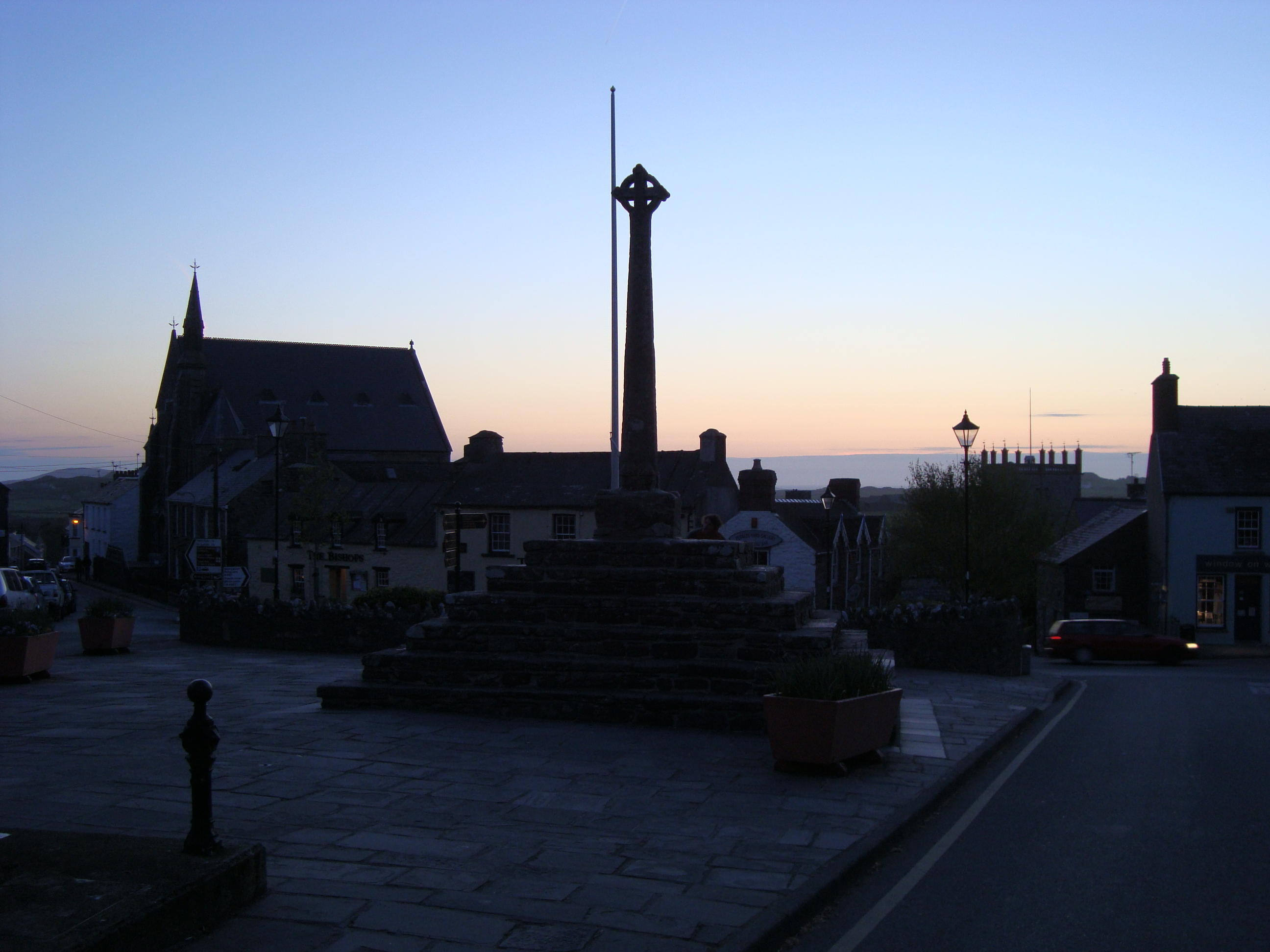
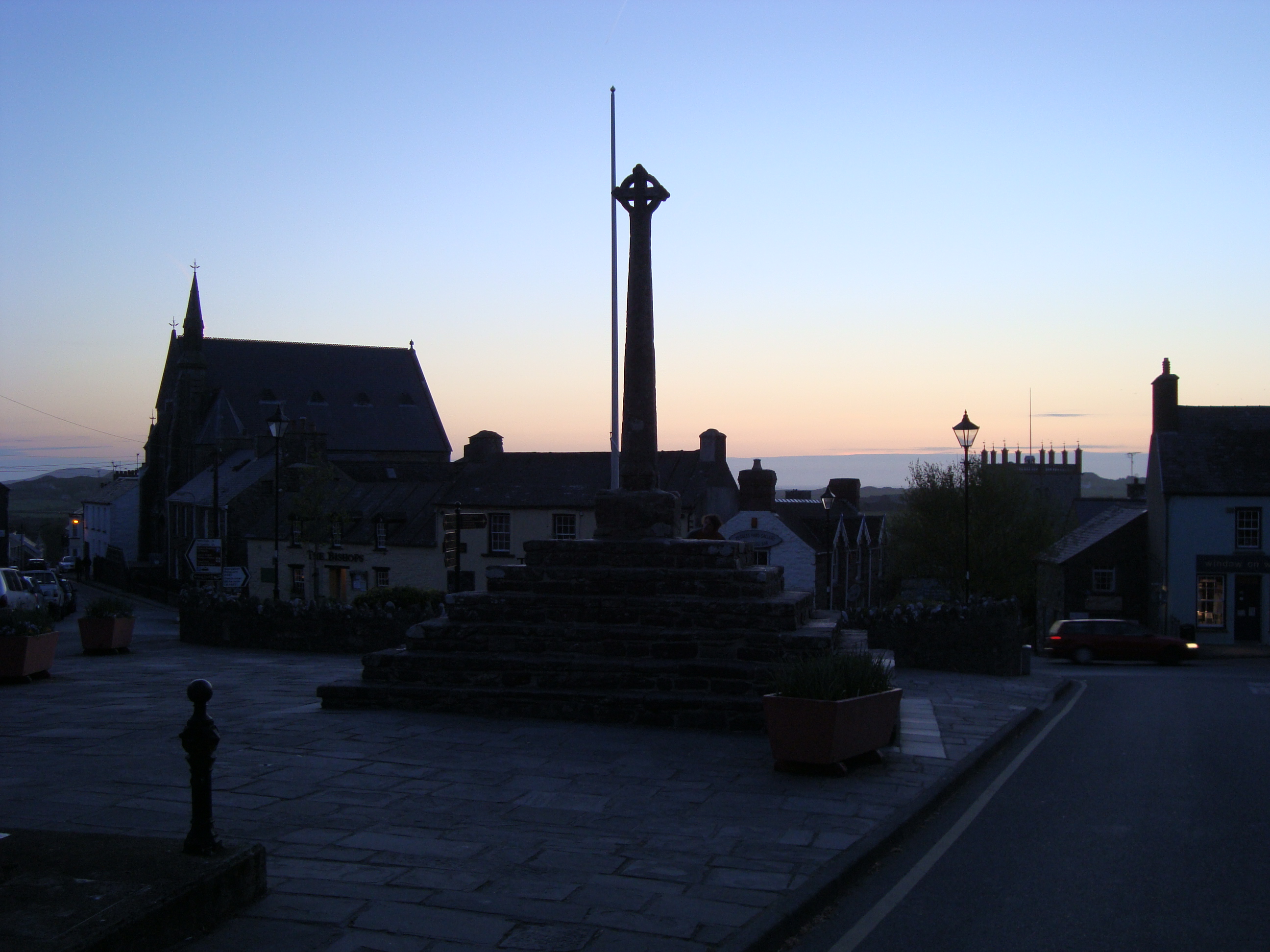
At the very least, Celtic crosses – which I have also come to understand as also being called the Sun Cross – make a great silhouette in a photograph. I was reminded of this when we got to St. David’s in Wales with the cross poised in the center of the little city there. 

Celtic cross in the center of St. David's - perhaps marking the point where best to see the setting sun over the sea

So the next time you are at a great seaside spot in Britain, or simply at a place where there are frequently great sunsets where the sun can be seen to sink beneath the sea, have a look around and see what I mean.  It is just a little thing I’ve noted – and may not be significant at all.

I am not sure if it is my mind playing tricks with me but I do seem to remember when travelling back in 1991 that when I found one away from any church or formal settlement, then I knew that that was a place to go and see the best sunsets – especially when near a place with views out to sea! 😉 


[1] That musician is Karl Eland, recently heard on Radio 6, and his song is entitled “Where The Ocean Meets the Sky”.  Karl will be playing a gig at The Troubadour in Earl’s Court, London on Wednesday, 1st June. For further details about the gig, click on:  Karl Eland at The Troubadour

Posted in Kent, Pilgrimages, St. David's, Travel, Wales, Whitesands, Whitstable | Tagged , , , | 2 Comments

The Seafarer’s Merry Tale of the Millenium

Believing it to be a way to bypass any adverse effects from the Millenium (aka Y2K) bug, a number of people embarked on specially organised millenium cruises at the end of 1999.

Despite many modern cruise liners still being heavily dependent on computers to operate, there was a belief that a ship, out to sea, provided a self-contained and controlled environment free from any disasters that might happen due to clocks not allowing computers and other devices to operate after midnight, 2000.  

In many cases, the deposits were taken months in advance and were non-refundable.  

The charter of one of many such ships was managed by the owner of the little cottage we stayed at in Wales  for the week of the Royal Wedding: one Beat Wehren. 

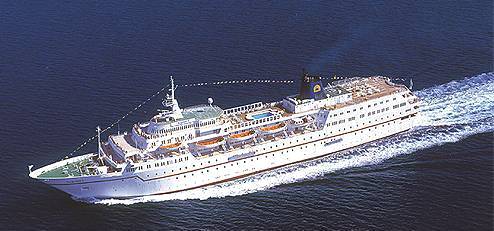
It was sold as the cruise to end all cruises – an exclusive circumnavigation of the globe for the first four and a half months of 2000. The ship chartered was the Aegean I and had a capacity of 500 passengers, stopping off at many renowned ports around the world, with all 500 guests staying the entire journey.

As Beat tells it though:

“People did not allow for the fact that they would be stuck together for that amount of time, and the ship was not so large you could avoid one another – not like the huge cruise ships today that are essentially like a floating city”

So the truth be told, it was not quite John Masefield’s romantic ideal[1] of heading down to the sea, finding a good ship and a star to steer her by, before sailing off into the sunset.

The Aegean I - ship used for The Millenium Cruise by The World Cruise Company

 “Also, even in the calmest of seas, things can go wrong”, Beat merrily regaled us on our last night there in the safety and inland comfort of our cottage in Wales- relatively far from the port of Fishgard where the cruise ships used to leave from.

Beat's Seafarer's Retreat - Fronhaul in Pembrokeshire, Wales

 “The Maxim Gorkiy, one of Russia’s largest cruise ships, was in calm seas when it almost sank after hitting an ice floe – but that is not all that can go wrong, especially when you are the charter representative managing all the passengers’ welfare and concerns” 

Maxim Gorkiy - a super cruise liner

The World Cruise Company was one of those cruise lines that had committed itself to the safety and comfort of an elite clientele who wanted to get to know each other well – perhaps even doing business together – while sailing the high seas around the world.  A high price was paid for a berth on what was touted as one of the most exclusive passenger trips going.

The Aegean I is not a large cruise liner by modern super cruise liner standards and so the roll of a ship that size is noticeable when the weather gets a little rough.  However, when seas got especially high one night – as a storm was due to break – Beat was called out to get some of the foolhardy crew to come inside as the waves got higher and higher, threatening to break over the bow of the ship. 

The challenge Beat had was that the crew had been recruited from the Greek Islands, and so were more used to hopping short trips from island to island in the Aegean and Mediterranean where the ship was never far from land and the seas never got as high as they could be in the storms way out in the middle of The Atlantic or Pacific Oceans.  Occasionally Mediterranean seas would get rough, and the ship would roll, and these guys would ride them out on deck – like the tough sea-farers that they had touted themselves to be in taking on this ticket – while the passengers stayed below. 

This experience was different however.

Suddenly as the first big Atlantean wave broke over the bow – washing the crew from one side of the deck to the other, agreement was at last struck that it was best to take refuge inside. 

“Most of the wealthy passengers, by that stage”, Beat said, with a faraway look in his eye, “were lying on their cabin floor – some perhaps ruing the decision ever to step aboard”

The heady rock and roll of the high seas was not all there was to contend with however.  The passengers were conscious of their schedule to stop off at various places along the way, perhaps following a little too much adventure on the big ocean waves, and were just as interested in navigation along the way as the captain ought to have been who had mistaken the GPS that Beat had bought as being a very fancy satelitte phone.

There was an element of Basil Fawlty cruises in how Beat told us this. Perhaps moreso when he advised what happened midway across the Pacific when a call came from the captain to say that the money from the charter company had not come through. 

The ship, at that point, had been steaming across to the Seychelles Islands and Mombassa.  With the money not having been received from the charter company, the captain had been advised to turn back towards the Red Sea instead. Beat had managed to stop that happening by getting the ship to sail in a wide bow, while waiting for the call back from the owner of the charter company to confirm payment had gone through.

Also at that point, fancy footwork had to be used by Beat to not alarm the passengers, as some had become savvy to how the ship had already cut short its stay at some of the places along the way due to delays – including travelling through the Panama Canal by night – and so were now using their own means to work out where the ship was at with its Greek ferryboat crew, who were clearly not so sure on what to do.

Finally the call came, and the ship resumed its course due to payment being received – and with the passengers largely none the wiser in how their cruise had nearly come to an untimely end.

Despite all this happening, and the company ending its days not long after that great ship’s return, the passengers of Aegean I’s Millenium Cruise still hold annual reunions – perhaps as a testament to how a shaky sea passage, as much as a pious pilgrimage on land, can lead to an experience to bring posh[2] people together and change lives through providing stories they can dine out on for at least ten years to come….

Of course, Beat also had a perspective on the trails in Wales that we had found to lead us down to the sea – and exactly where those trails ended, and new ones began elsewhere – however, to keep in the spirit of John Masefield (as stated in my previous blog), that really stands as a tale from a fellow land rover rather than a sea-farer. So let’s drive on as far as the land takes us, perhaps even to where the sun sets and the ocean meets the sky!


[1] See poem at end of previous blog

[2] The term “posh” comes from those who had the best cabins on cruise ships – as it refers to those seeking to get the cabins on the opposite side to the port where unmentionable was often dumped – so Portside Out – but being able to see the land first when the ship came into harbour and before it berthed – as in Starboard Home.  So, given they all considered themselves to be members of the gentry, I wonder who was POSH on the Millenium Cruise?  Maybe there’s not just one single Chaucerian seafarer’s tale but a whole yarn that would lead a John Masefield to set sail (or not as the case may be!).

Posted in Fishgard, Travel, Wales, World | Tagged , , , | Leave a comment

The sea theme stayed with us as we crossed over the magnificent Severn Bridge into Wales. From having been stuck on the M4 motorway all the way from London, suddenly you are aware of the coastline because, as you drive further into South Wales, you can see it or it is just over the horizon, hidden by a high hill with a steep cliff on the other side that occasionally gives way to a beautiful little bay that you can drive down into.

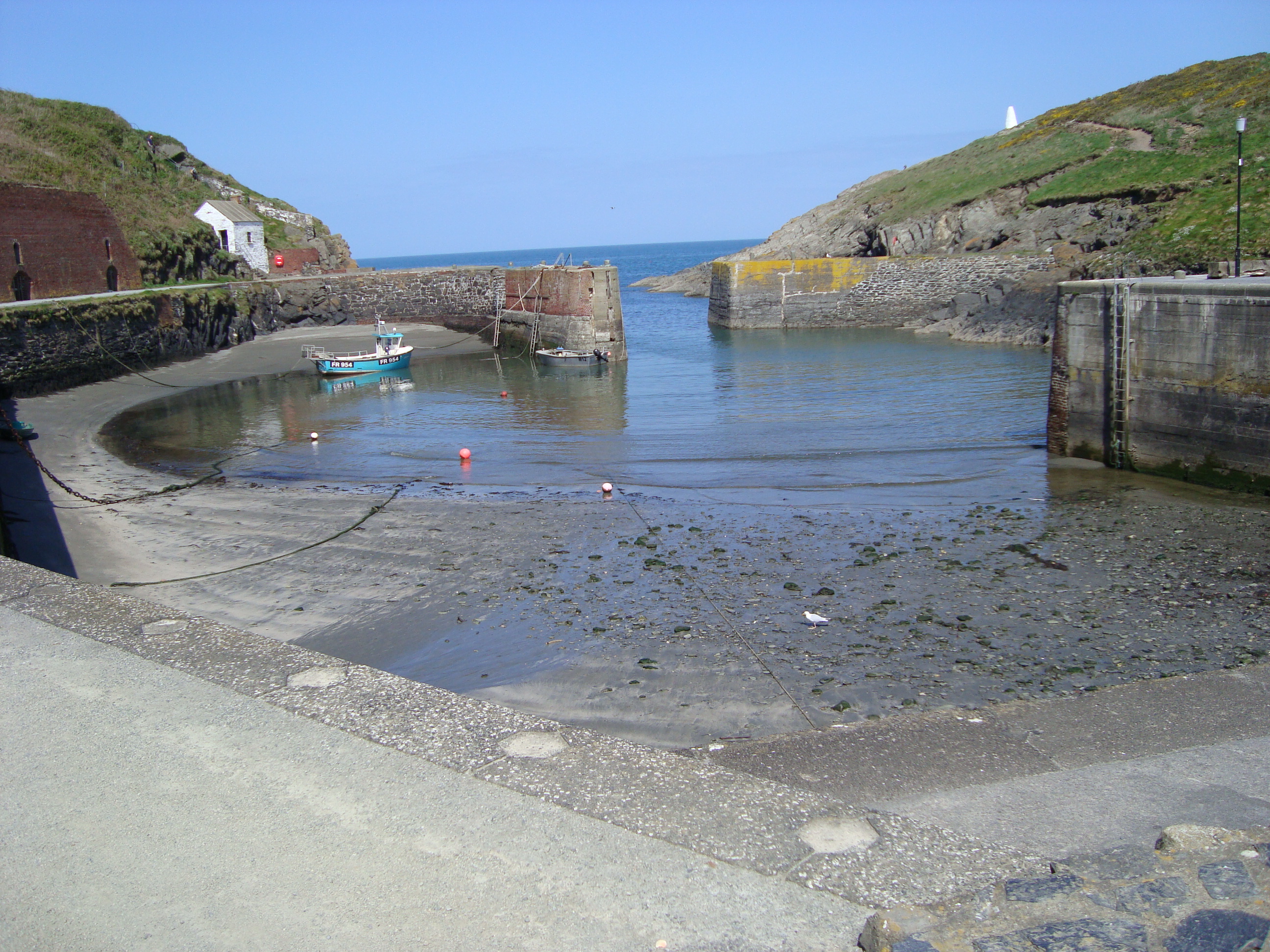
Porthgain - one of the many little bays with a port that you can drive down into

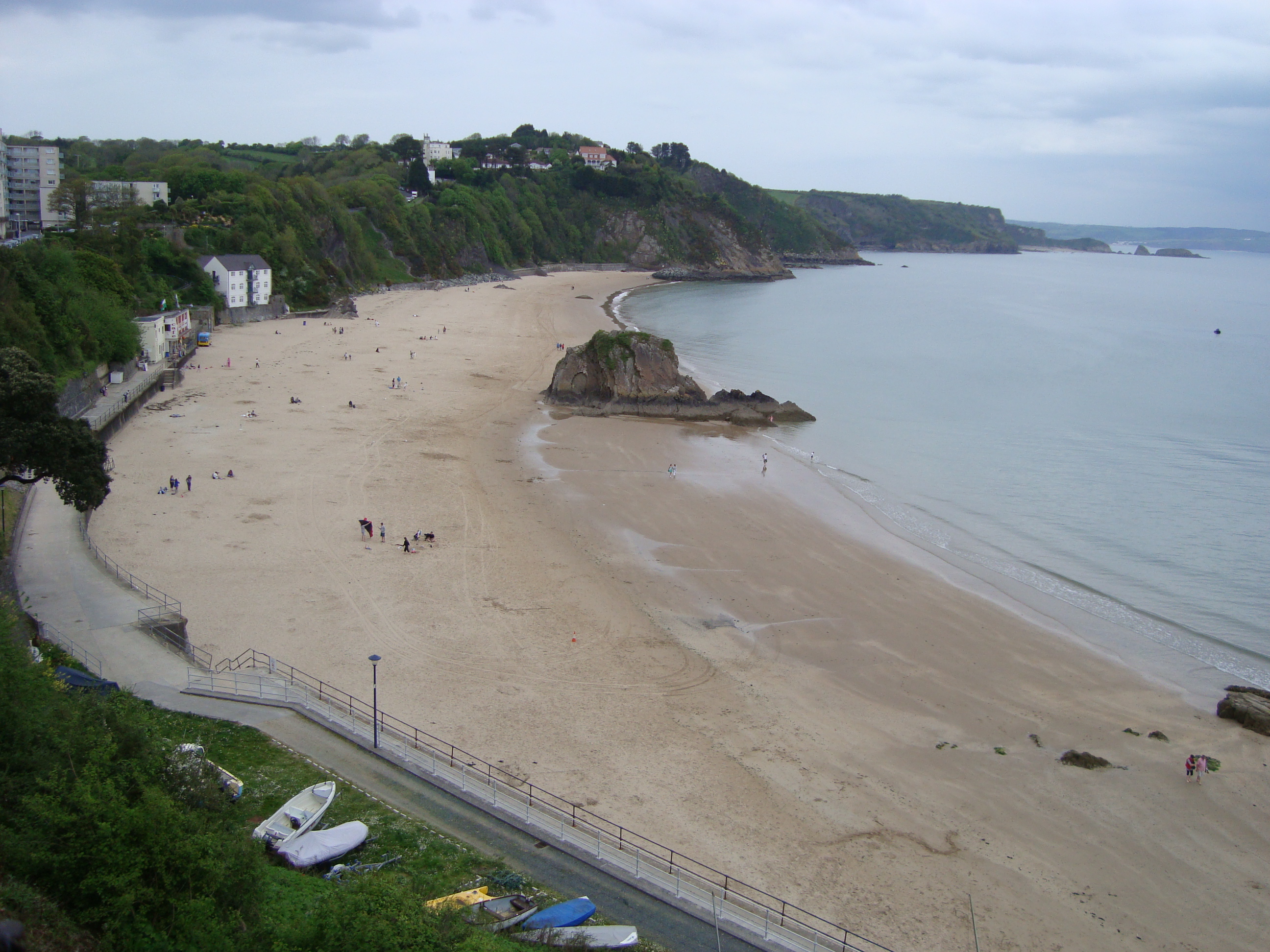
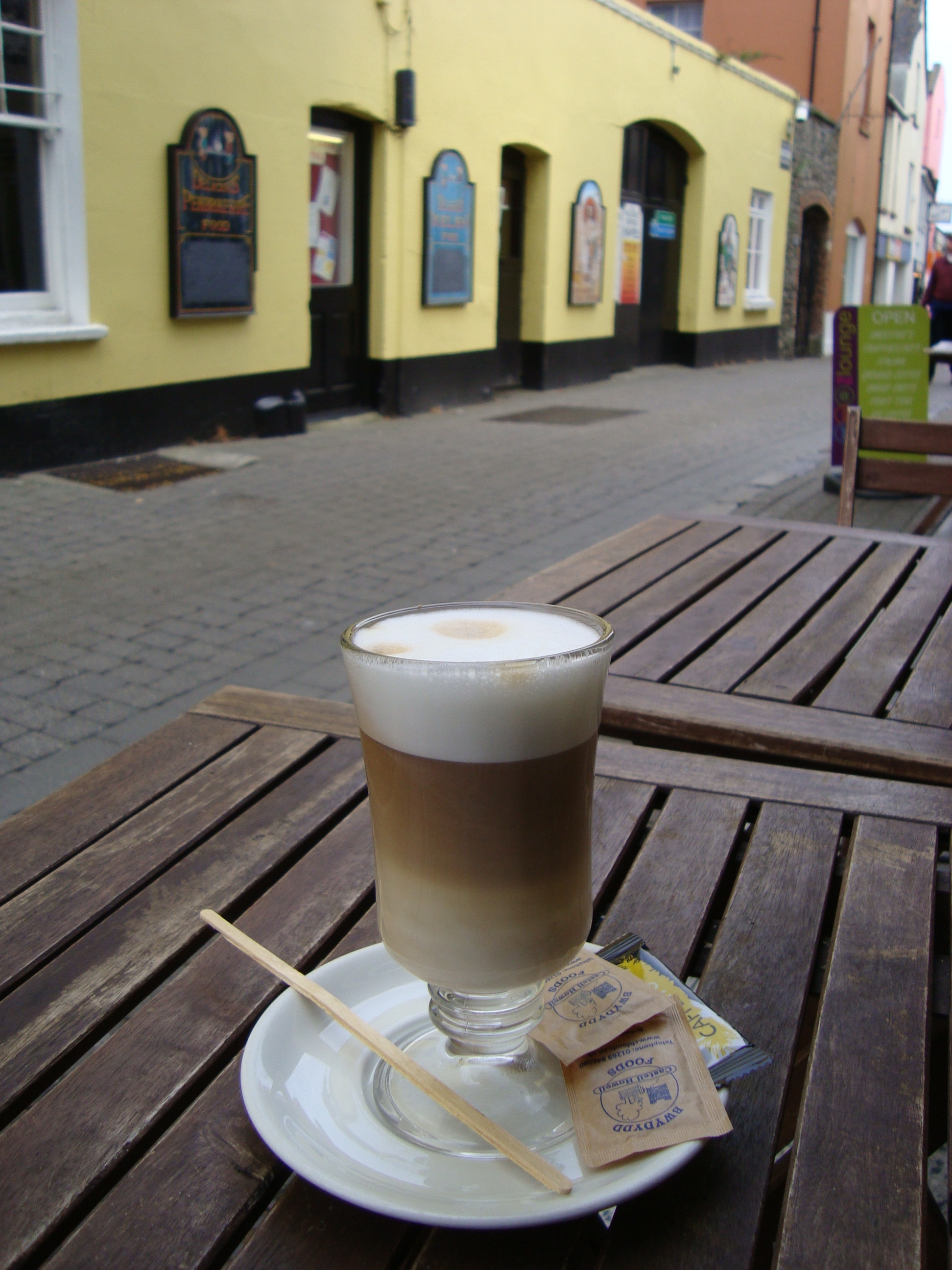
 Follow that coast road and you will sometimes find a beach – and, in Wales, even one with sand rather than the stones or pebbles that are more prevalent on the English coast-side (apart from a few places in Cornwall) – as well as a town with a place to get a decent coffee, and a cute port complete with nice colourful sailing boats and great architecture.  In Tenby we were lucky enough to find all three!

One of the sandy beaches at Tenby

Latte at one of the cafes in the walled town of Tenby


Port at Tenby

Getting to the sea-side in Britain is not a big deal by comparison with other nations  – one day’s ride by car in most directions and you will end up at the sea. The only exception being if you head directly up the centre of the island from London and strictly do not veer left or right at any stage. 

Still, it surprised me when I first came to London back in 1991 to meet people who had never seen the sea (except perhaps on TV), nor indeed travelled more than ten miles radius of where they had lived their life to date. 

With one particular family I found myself showered with a box of designer English brand tea and shortbread biscuits when I hired a car and took one teenage lad and one twenty something lass down to see the sea from Brighton pier. Perhaps ironically, they were friends of a girl from the East End who I had met in Australia – and the goods were ones from the export company that the Dad worked for. 

For me, seeing the sea at least once a year is almost a necessity.  Admittedly it is the appeal of nice, sandy beaches as well as picturesque ports with nice boats moored in them that makes the sea- or port-side appeal, as well as sitting out on the sea-front watching the waves and the boats tossing each other about. That classic tune, Sitting on The Dock of The Bay, sums it all up for me.

The amazing thing with Wales is that some ports are so tucked away from the main bay, such as at Solfach Solva, that you can see how the place would have been great for smugglers – but also for hiding the smaller boats of the English fleet from the large galleons of the Spanish back in the time of the Armada.

The port at Solfach Solva

Going out on the sea itself is another matter however – and, on this first trip to Wales, it was to see at least one of the little fellers shown in the following photo that we thought we would make the 20 minute crossing from Dale across to an island bird sanctuary called Skomer Island.

A puffin of Skomer Island, living near the landing

Although it was not exactly Sea Fever that got us out to Skomer Island that day, I do love the vibe of that poem by John Masefield (as shown below) for capturing the will that simply seeing the sea can instil to travel further, and beyond the immediate land mass one is on. Certainly the pilgrimage trail we discovered seemed to lead right down and along the water’s edge – but then where it went from there was unclear. 

So, for us, it was more a case of sea further rather than sea fever that led us to talk to a local former sea-farer who, as it just so happened, owned the cottage where we stayed and had many tales as much as theories about where the tracks went to and where the pilgrims would go once they had decided to leave the land.  However, for this blog’s sake, here is Sea Fever for helping to get the idea:

I must down to the seas again, to the lonely sea and the sky,
And all I ask is a tall ship and a star to steer her by,
And the wheel’s kick and the wind’s song and the white sail’s shaking,
And a grey mist on the sea’s face, and a grey dawn breaking.

I must down to the seas again, for the call of the running tide
Is a wild call and a clear call that may not be denied;
And all I ask is a windy day with the white clouds flying,
And the flung spray and the blown spume, and the sea-gulls crying.

I must down to the seas again, to the vagrant gypsy life,
To the gull’s way and the whale’s way where the wind’s like a whetted knife;
And all I ask is a merry yarn from a laughing fellow-rover
And quiet sleep and a sweet dream when the long trick’s over.

By John Masefield (1878-1967).
(English Poet Laureate, 1930-1967.)

Postscript

I later learned that the teenager subsequently went and got his driver’s license – and was the first one in his family to learn how to drive.

Was it the drive down in the car to Brighton or simply just getting to see the sea that changed his life? 

Certainly it was something from that one experience that was a defining moment for him and affected him and his whole family in how they were so happy about it afterwards. 

Perhaps sadly, I never stayed in touch and so cannot find out what it was that made the difference for him – yet I still believe an experience like this, in seeing or doing something for the first time (and beyond one’s “comfort zone”), makes for more than just a holiday – and is something we should all do at least once or twice in our lives.  Even if it is just to see the sea…

Posted on by Matt's Tale | 3 Comments

Signs of The Sea

My first experiences of the dramas of going to sea were from a TV program called The Onedin Line – even the theme tune captured well the sound of the sighing waves, as they are rising up and down, carrying that ship with the wind in its sails out into the oceans to climes unknown.

As we came into Bristol, on the way down to Pembrokeshire in Wales (where a lot of the final series of The Onedin Line was set), I saw the tops of the tall ships’ sails there and was reminded of this as well as other very personal memories of leaving home and heading somewhere – perhaps never to return or not knowing where I would return to (as one thing I did know, even then, was that it was likely to be something of a Homeric journey for me).

Certainly, it is with great sadness that a sea-faring folk song is one that summed up how it was leaving my mother behind in New Zealand back in 1990 – with the intention to come to England.  However I did not realise how poignantly tragic that the lyrics of that song would be for me.

For it was indeed the last farewell, as echoed in that song sung best by Roger Whittaker, which I was reminded of when hearing from my older sister that my mother had contracted multiple myelloma, a vicious form of cancer of the blood. By mid-1991 it had left her starved of oxygen and, as she was diagnosed as having  only a few months to live, I had to make up my mind  whether I would return home to see her after I had ended my first travels here, or stay on while there was still time left on my visa (but with the risk that I would never be able to return at all if I did go back).

Certainly, my Mum – God Bless Her – had told my sister that she did not just want me coming back for her, as she knew that it was then perhaps a once-in-a-lifetime opportunity for me – but it was fairly definite about how long she had left to live, as well as clear that nothing could be done at all to slow or stop that wicked illness. 

I think it was the combination of how I had sent the stories back home that I am now trying to write about, amongst others, in these blogs as well as that sea-faring song, along with memories of that TV show, that made me decide that it was too much to simply leave that goodbye in 1990 as “fare well”.  

However, it was the “Last Farewell“, a song that we used to sing in the car when we went away on holidays somewhere, that now means so much more to me now in reminding me of that time and first journey down to Bristol – before I knew anything at all about her being ill.  Now it’s like that song sums up leaving home on a lifetime of travel and work in different places – and how “home”, now, is where the heart is. 

Anyway, this blog is for you, Mum, wherever you are now – but maybe I will understand and remember more clearly now about “home”, from taking these trails again that I took when you were still alive twenty years ago, as well as what or how much more there is than that at the end of the day.  Certainly my ship is rigged and ready, as is my compass set for finding home again….

Posted in Bristol, Pembrokeshire, Travel, Wales | Tagged , , | Leave a comment

The Lost Pilgrims of The West

Going further west than I had ever done before, I was expecting to see and meet more of those that I originally met heading The Alternative Way, as I have dubbed it.  This would mean finding those who were more caught up with the legends of King Arthur, Avalon and old mystical places – rather than anything to do with prayers, religious dogma and revelations – and like one of the sets of characters that I first met back in Winchester in 1991. 

My expectations were based on snippets I had read about those claiming some part or hold over the old  Dark Age legends of Britain, with the Welsh – those furthest West – being amongst those with perhaps the closest, if not strongest, claim to perhaps the best known of these: that Merlin, the spiritual advisor to King Arthur, was one of their people (or, rather, a spiritual leader from one of the native tribes who lived in that area back then).  There’s also the claim that some of the stones used in Stonehenge come from the Preseli Mountains there, and that Merlin is supposed to have somehow used his powers to help transport them to its site in Salisbury Plain.  The Irish also claim Merlin too – but, either way, it seems to be accepted that he was a Celtic character  possibly involved in spiritual proceedings around that time and some form of druid or magician.

The thing is, it’s only been snippets like that that I have found out about the Welsh and Irish connections – and perhaps because both Welsh and Irish are Celtic languages that were only spoken and not written at that time?  Who knows – but I was hoping I might find something that might at least relate to those early times and experiences, without necessarily having to learn the language.

To start with, I must admit, I took it easy on following this trail and enjoyed the great sunny weather that we were very fortunate to have in that Royal Wedding week – and especially where we went to in that little corner of Pembrokeshire in Wales that sits conveniently at the end of the M4, along with its load of great well-preserved Roman and medieval walled towns to explore (as well as great beaches and countryside, of course!). 

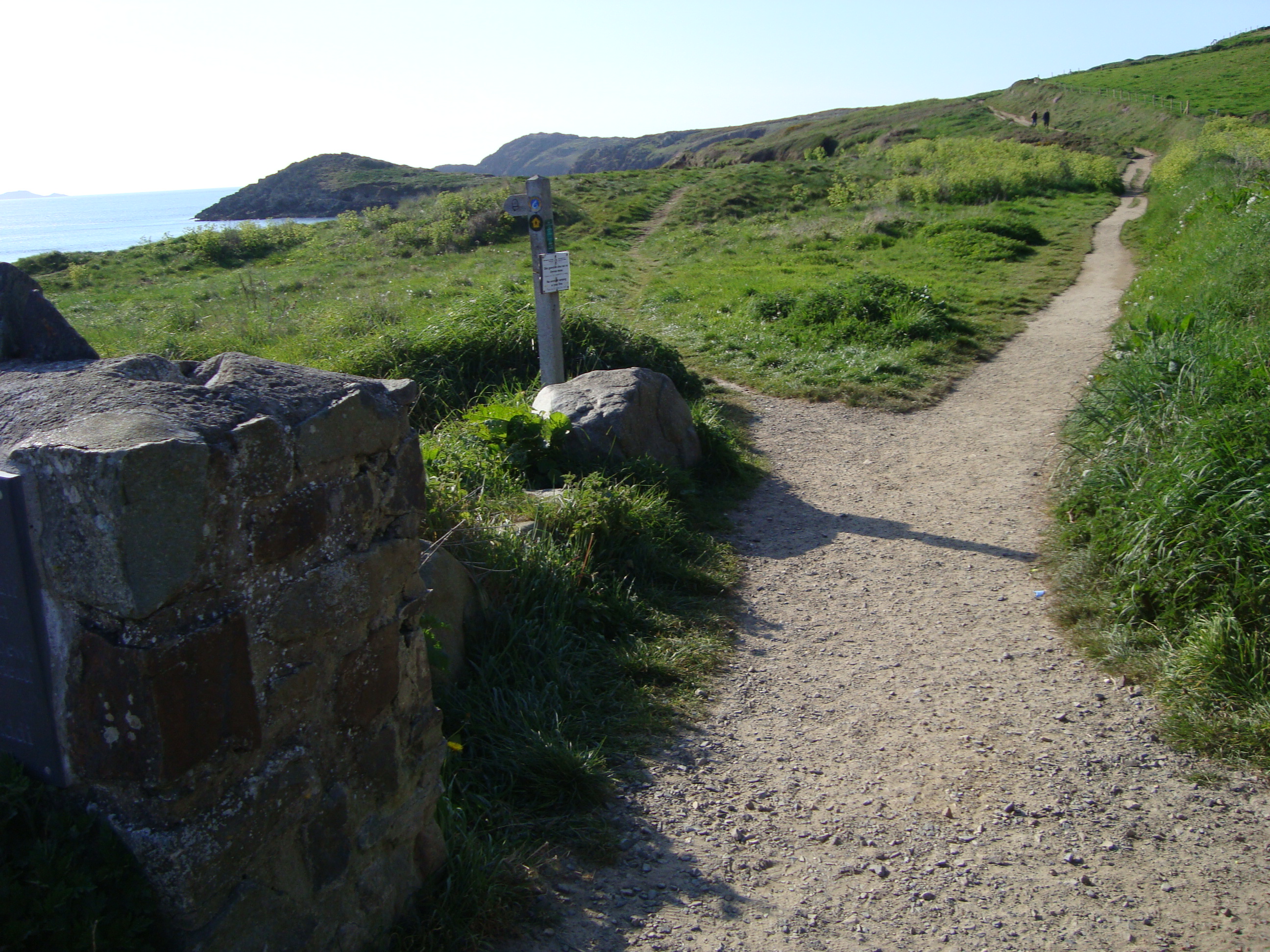
Surprisingly though, when simply just relaxing in those first few days there at one of the beaches, I came across this sign:

Sign at Whitesands, near St. David's in Pembrokeshire, Wales

Ironically, this looked to fit more with The Pilgrim’s Way – which I was used to seeing signs and places to visit back on the East side of the M4, and especially from Winchester in the South to Canterbury in the East. 

No one had told me about the pilgrims’ trail in this part of the country before – and, perhaps naively, I had just presumed that everyone in the Dark Ages and medieval times went east to find their will or their way or whatever it is that a pilgrim seeks. Of course, I should have realised that back then the kingdom was not united as it is now – and so the Celtic people of the West side needed their own set of saints and succour, as much as those did in the East. 

Sadly the actual site showed no sign of the chapel, nor even burial ground, that once stood at this place.  There was a path next to the sign that led off into the hills, but I could not see any trace of plots and buildings.

The pathway next to the sign showing the pilgrim site It was not until I went to get back in the car, and looked back across the carpark to the sign, that I could get an idea of where the site of the chapel had been.Look back across the carpark and you can just make out the site

So who or what were those pilgrims seeking, so far from anywhere there?

It was not until I came to another town called St. David’s that I got any clue or inkling about who these pilgrims might have been seeking.

The clue was in the name of the little city and the consequences of how it came to have a cathedral. 

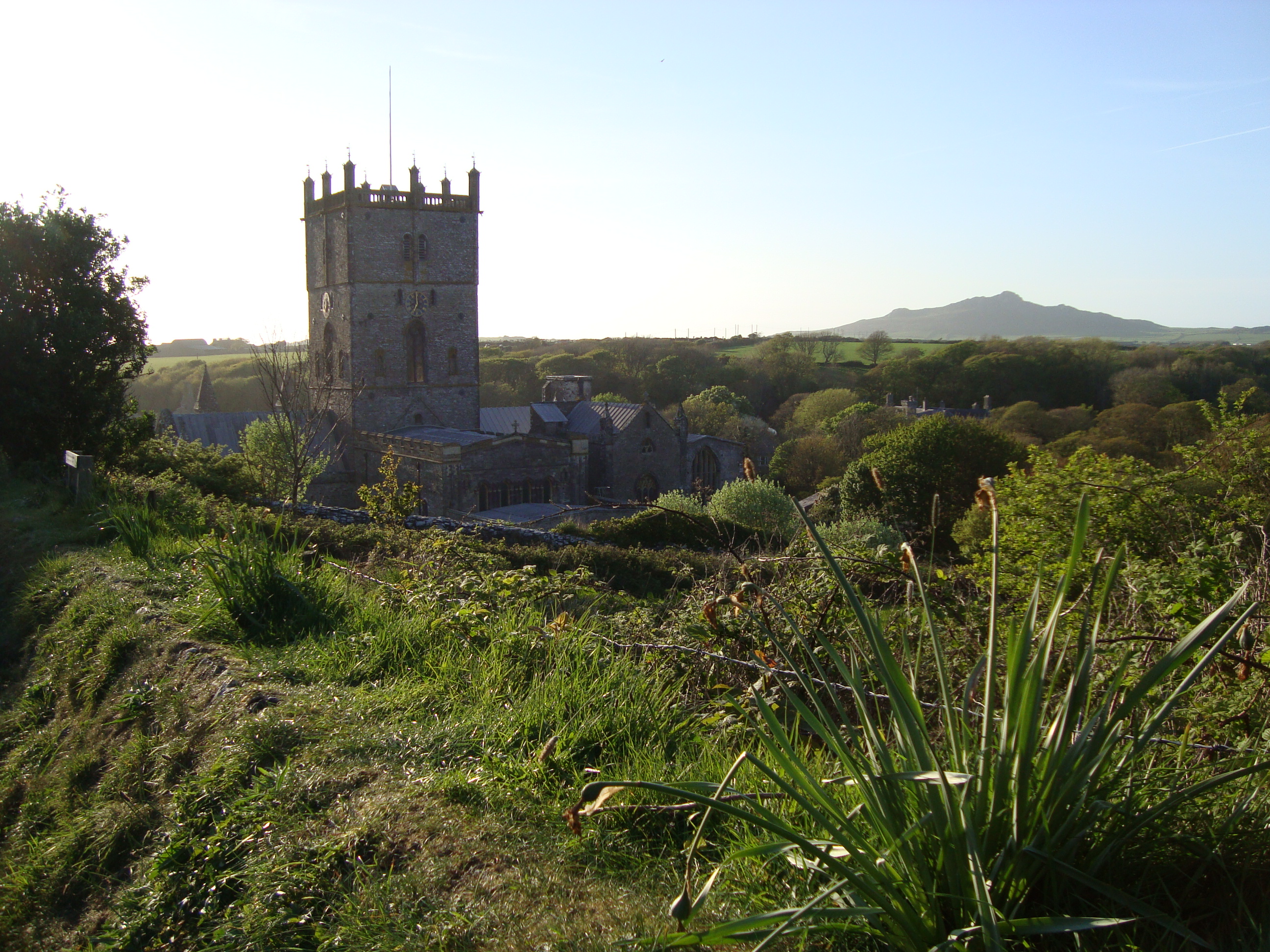
The Celtic Cross at the heart of St. David'sSt. David's Cathedral - which makes it St. David's City

St. David’s is, in fact, the UK’s smallest city – having been granted that status by Queen Elizabeth II on account of its cathedral. Yet there is more to it than that, as I discovered.

St. David's Cathedral - making it St. David's City

St. David was one of the first and officially recognised Celtic saints, as well as being the patron saint of Wales. An interesting fact is that he was “born out of violence” to the daughter of a king by the King of Ceredigion. His unfortunate mother, Non, ended up her days in a Breton convent and notably achieved sainthood herself.  He lived in the fifth to sixth century AD.

The timing of this seems to tie in quite well with Arthurian legends of the time. Indeed, St. David was reputed to have visited Glastonbury around the time that King Arthur was reputed to have lived – so perhaps they could even have met or he could have written a sermon, story or letter about him or “the great encampment of Camelot” if it existed then and there?  Indeed, his mother may well have known Lancelot and his mother, Vyvyanne and the du Lac family – as they originated from Brittany.  Certainly the contemporary parallels are interesting, if not intriguing.

Unfortunately none of this explains the sign I saw down at Whitesands beach, however I am simply surmising that site on the pilgrims’ trail there ends up at St. David’s – but with nothing to tell me why, as yet.  

Certainly there is nothing to connect this at all with The Pilgrims’ Way in the East – and so it seems like some potential for lots of lost pilgrims in this part of the UK [ and maybe that’s where the expression “Go west” has come from – perhaps even tied in with going that far to see where the sun goes after it sets – but it is not clear from some of the links I’ve found on that ].  Still, who were the pilgrims back then and what were THEY seeking, by contrast with their Anglo-Saxon Christian counterparts in the East.  Certainly the crosses are Celtic by contrast (and I will blog more on why that may be significant later).  

For now, it seems that Wales has losts its pilgrims and its pilgrim’s trail – perhaps to the wise men of the East – but maybe there’s simply more research in following up on whether this is the case and why, as well as blogging on’t.

Posted in Pembrokeshire, Pilgrimages, St. David's, Whitesands, Winchester | Tagged , | 3 Comments

One Day’s Ride from London

 What a difference a day makes!   24 little hours, or so the old song goes (and try clicking on this link to play this song as you’re reading this – as I am hoping you’ll find that that too makes a difference for capturing the mood I was in as I wrote this! 😉 ). 

That song seems to especially relate to when something highly eventful happens – such as the Royal Wedding on April 29th that touched so many peoples’ lives here in the United Kingdom and around the world – and the feeling that everything is different, somehow, after all has been said and done.

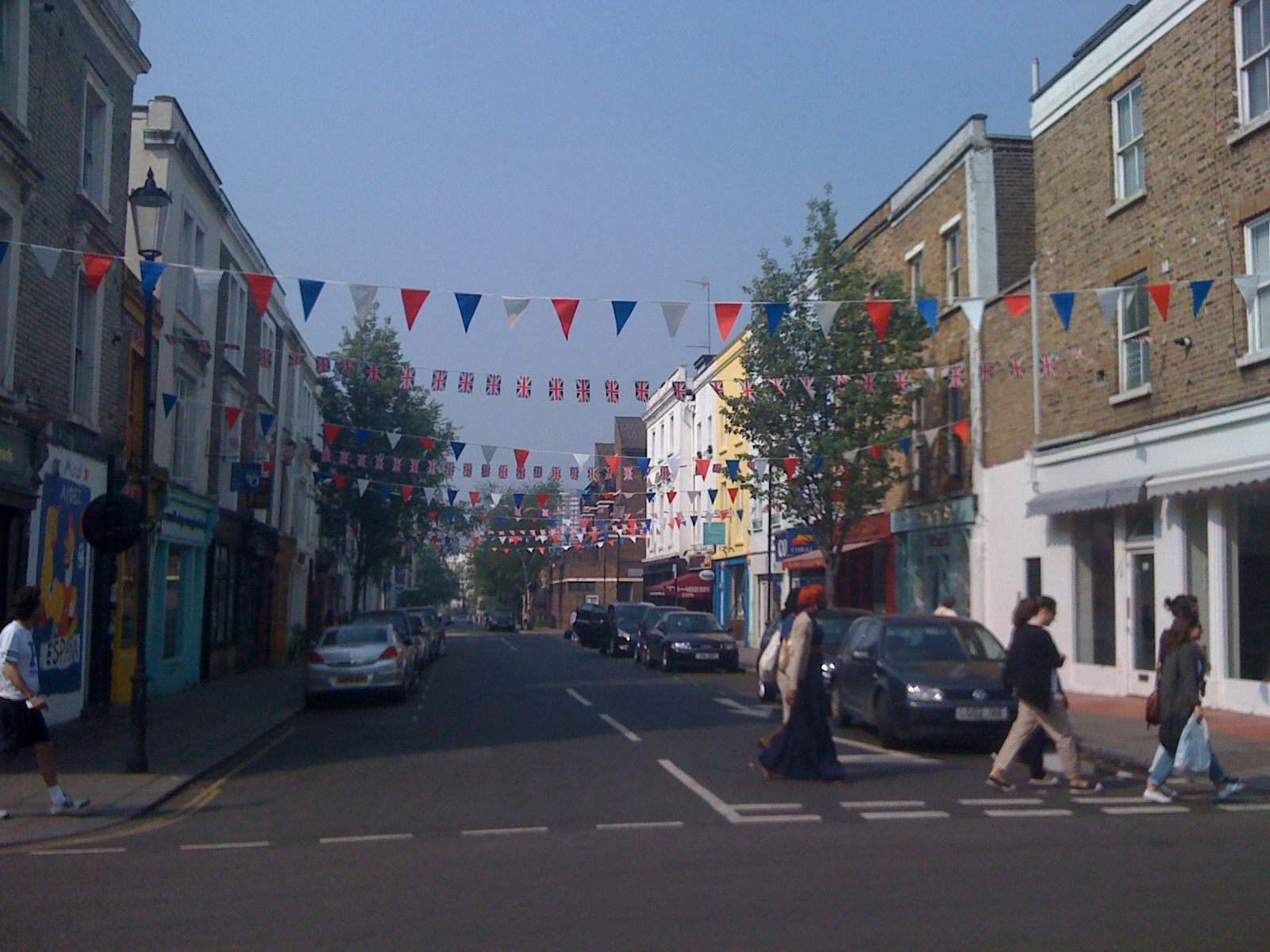
The blog of my tour guide friend, Cindy Eve, captures the excitement of the hours before and on that one day so beautifully, for both local and international citizen alike, that I will not say any more about that great day.  Except that is to say that, even in the quietest backstreets of London, it was hard to escape signs portending to some great special celebration beyond simply the usual gold-covered chocolate bunnies in the shop window, or the smell of hot cross buns wafting from cafes, as signs of the regular annual coming of the end to the Easter fast or, simply, an end to the long dark days of winter.   
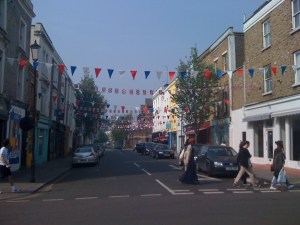
One of the little side-streets of Notting Hill, with wedding banners across the road two weeks before the wedding - but nothing by comparison with downtown London, of course!

For me, that little “change in 24 hours” principle equally applies to travel as much as special events.  Especially to when I’ve travelled, as I have just done in the past week, to somewhere completely new in the space of a day.  I almost feel like I am a different person afterwards

I think it comes as a result of how different that new place is to anywhere else that I’ve been or seen, as well as the excitement of discovering why it is so different. 

Or simply just enjoying the difference, if it is a relaxing holiday.

It’s like one’s whole being is somehow lifted, as much as rested, purely by the change of scene.

Perhaps that’s how and why the word “holiday” has come to be derived from “holy day”? 

Words can almost not describe how much difference that change in scene can make to the psyche – read on to see what I mean…. 

The Grey Escape!

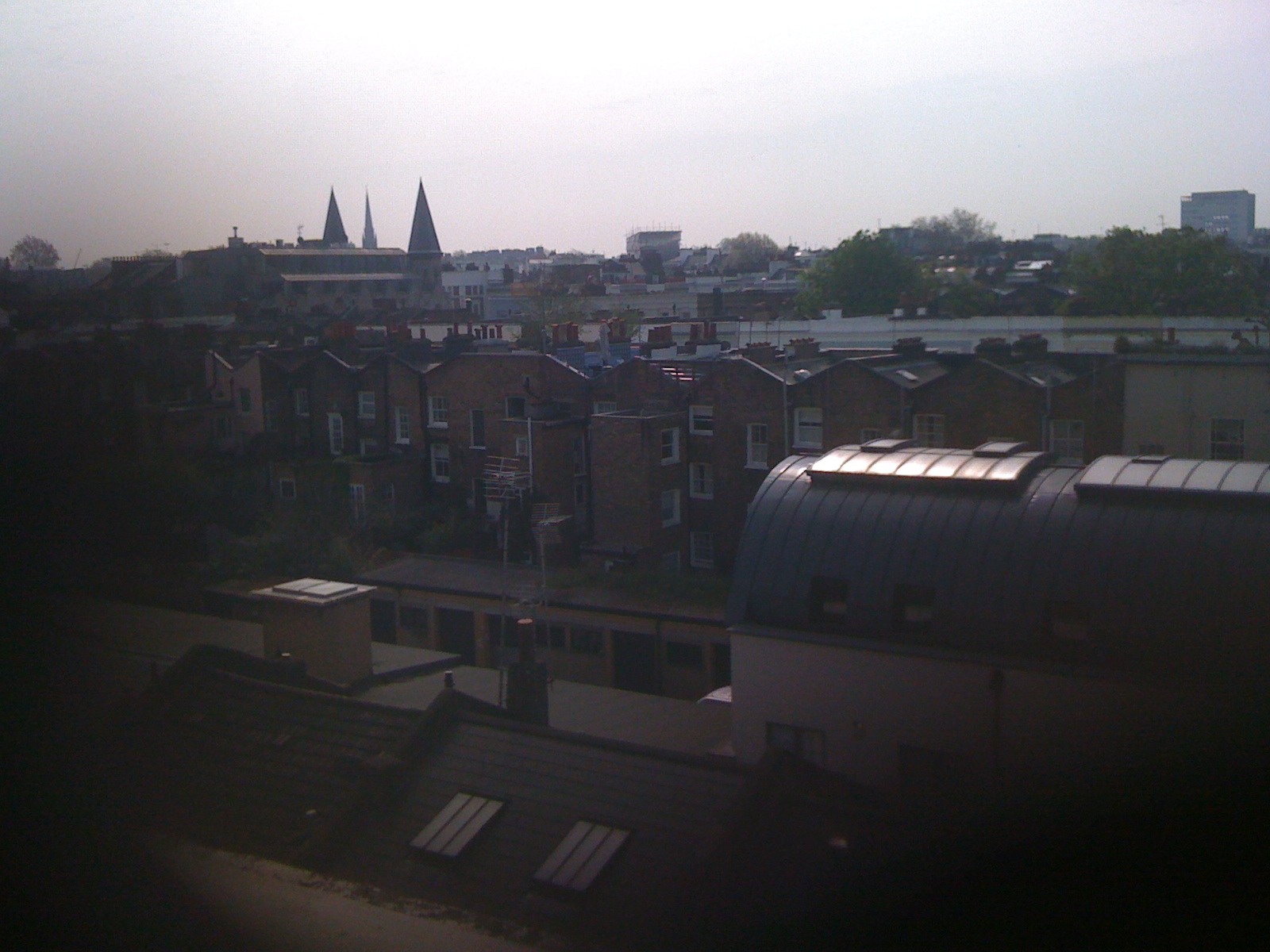
From this - my home office window- in Notting Hill

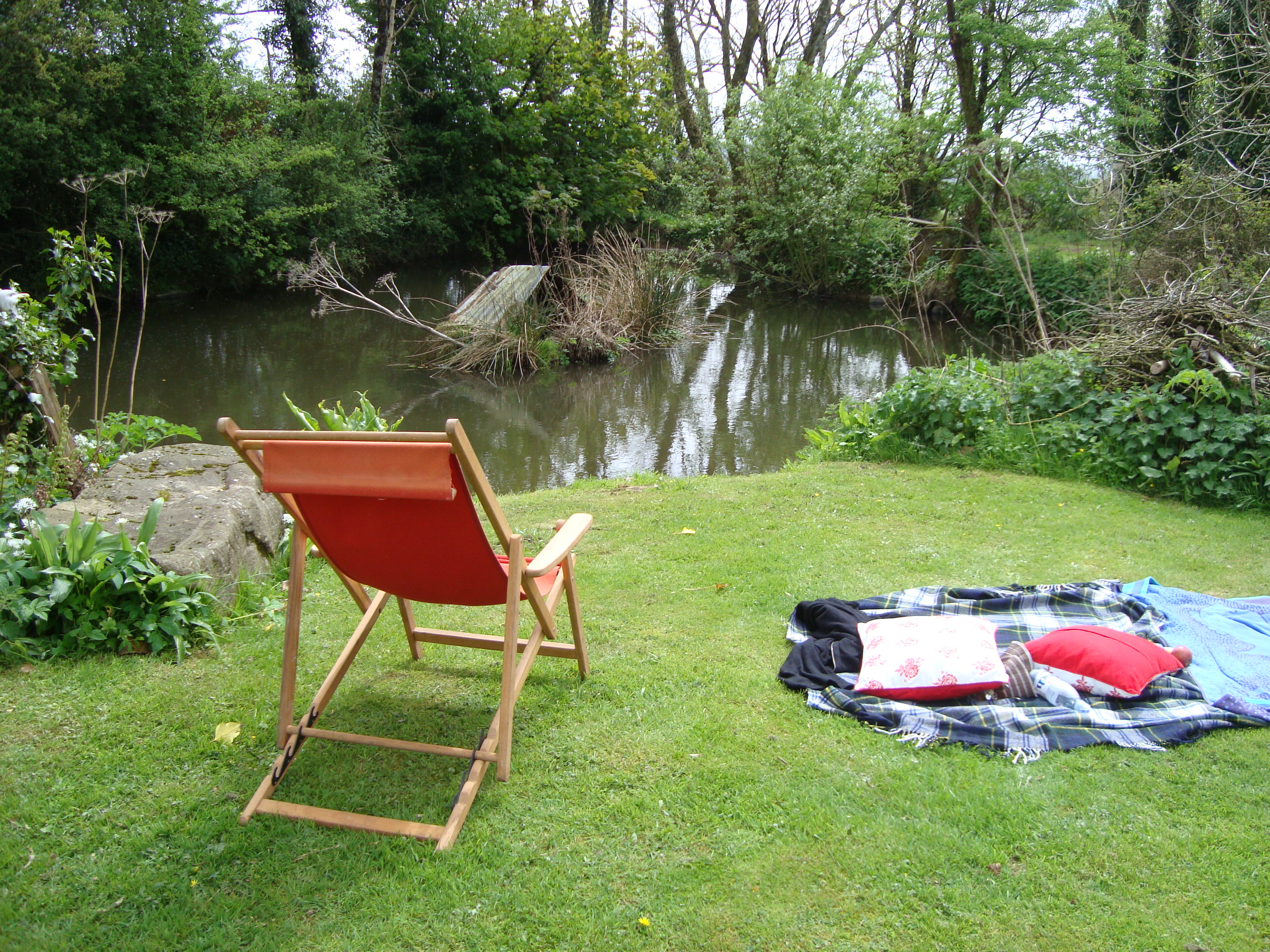
....to this, by the pond in the little garden at "Fronhaul" in Pembrokeshire, South Wales

Our recent drive to get away from it all was not just from the spires and chimney stacks seen from my office window however, but also from anticipating the madness that would prevail in London on the following Friday with “our Wills’ and Kate’s wedding” as some locals affectionately refer to it (and belying the regal status that this couple have here in British society that separates them from the average and typical commoner, that Kate and the Middletons are clearly not). 

So my wife and I had decided that we would take a road likely to be less travelled that week – and so headed across to Wales, or Pembrokeshire to be precise, on the Sunday before “the big day”.

This went against my original musing back in March about fully and finally taking the road to Canterbury this Easter, visiting the original stops along the way that Chaucer and his companions would most likely have been to and seen. 

Ironically, with the Royal Wedding that week, the Canterbury road was likely to have been one of the ones most travelled and visited – especially with the Archbishop of Canterbury presiding over events. It would have been madness to head there, from all accounts, with the crowds that would have been lining or queuing up down those roads more than any other.

So the best alternative, if we were to get any holy days at all, was to head further down and beyond that road that I first travelled back in 1991, and based on what I know now about the concept as much as whereabouts of “Camelot“.  

So, then on to (perhaps find) Camelot we go

Based on a great book by Philip Gooden that I found in Notting Hill’s famous travel bookshop, entitled “The Story of English”, traces not only what has led “the people” here in England to their first stirrings of nationhood, but perhaps to how their greatest achievement – that of the English language itself – has been formed from being a polyglot of words collected from the various Celtic, Roman (Latin), Anglo-Saxon, Viking and Norman settlers and invaders.

According to Philip Gooden’s book, it is not just a result of some of the greatest and savviest kings and queens of England that have made English – and the English – what they are today, but the advisors to them and their poets laureate (such as Chaucer) and their popular playwrights (such as Marlowe and Shakespeare) – of course! 😉

This reading up has made me realise how superficial my discoveries about knights of the Round Table, Camelot and King Arthur were back in 1991.  They had only taken me as far as others wandering the roads to Glastonbury, Stonehenge and Tintagel – which are fairly typical tourist traps, before then and now, and which I have since found to be based on a mix of legends written in French by a mix of early medieval writers of the early twelfth to fourteenth century.

Many of these stories are without any firm basis of truth and are born from developing or preserving a romantic medieval ideal of chivalry and good manners that the Normans were keen to propagate more widely, but then these are still things which we can all aspire to as much as the nobility themselves – yet, to understand them, required knowledge of the French that was being instilled as a result of the Norman invasion.  I am happy to say that some of this still managed to prevail in what are now termed “English manners” today, to some extent or other – and so perhaps, truth or no, ’twas not a bad thing? 🙂

Indeed, it was these stories, and not so much the cold hard facts and history that lay beneath them, that captured my imagination some thirty years or more ago growing up in New Zealand.

So, to tell a more modern Knight’s Tale….

Back then, in the eighties,  New Zealand was caught up between its passion for playing rugby against South Africa and principles for  not supporting South Africa’s apartheid policy.

As a result of the politics, I was made to feel that there was little heritage that I could safely call my own, as the focus was on looking forward to a country with its own identity and culture – but (sadly) without necessarily being open to discussion and acceptance of where all aspects of that culture and its identity have been derived from. 

So I think that these stories somehow provided me with something to latch on to that went beyond all the bad or sad news about unfair treatment to others, and some war somewhere else in the world, or otherwise about knowledge needed for work rather than living a good life, to a more higher and noble set of universal principles.  

They were seemingly directing me towards owning a set of values that were right, fair and free for all to follow – and were realistic in indicating how even the most righteous could fail or fall, or the lowliest or humblest could still find a place at the King’s or Captain’s Table, as long as they all strived valiantly and did what they did for the good of all. 

It was these things that provided me with some form of an ideal to live up to, despite the truth of the tales not necessarily being with any standing like I discovered.  Better still, these tales were connected with the culture that I originated from (though how much so is anyone’s guess, as it’s hard to trace geneaology back that far) – yet they could be equally understood and valued by anyone from anywhere.

However, perhaps it has been seeing the division and then reuniting of my own native country and its culture into an identity of its own – over such a short period of time (and which is especially relevant now with the Rugby World Cup on there) – that has led me to being interested in how these stories came into being.

Indeed, I’ve since discovered that the stories were seemingly not written up at all by the people from who they presumably originated.   Rather, it was the all-conquering Anglo-Saxon invaders – as well as scholarly monks of the Dark Ages – who did that.

The Anglo-Saxons capturing these stories, about the very people that they had finally vanquished, made me realise there was something of value that could equally resonate today in helping others recognise what’s good in another culture, as much as recognise what is good in one’s own.

So this is what led me to take some days off to see if I could find the roads less travelled there, from whence the well of “Camelot” perhaps first sprang – and rather than from where it ended up, physically, in capturing the hearts and minds of all British people of the modern day and not just those who choose to call themselves “English”.

So where did the legend rather than the place of Camelot come from?  This is where that end of the tale begins now 

I will instead return in later blogs to how I now see Canterbury coming into what we now associate with both kinship and kingship today.

And so on to Camelot

It was thanks to their royal highnesses that we had an extra long weekend following Easter that allowed me to take this other road so easily, as well as to taking it instead of the one to Canterbury. 

By leaving on a Sunday, rather than early Friday evening or very early Saturday morning as you would typically do here on any other weeks’ holiday following a bank holiday break, there were little of the usual traffic jams that are otherwise so typical. 

So the roads were quiet, and the weather sunny and bright, making it almost a pleasure to drive the long stretch of motorway from practically one side of the island to the other.

The beauty of the trip is that we didn’t have to go far to be transported into a different world that seems so near, and yet so far, from where we live here in West London. 

It is the moment you cross over the massive bridge across the Severn River, that essentially separates Bristol, the largest town in the West Country of England, from a curious mix of Newport and Cardiff, that you are suddenly reminded by signs in two languages that this is a different place to England.

The first Welsh word you learn is “Croeso“, meaning “Welcome” – but beware that how that is pronounced, as with many Welsh words, is not necessarily the same as how it looks!

It was to a little self-catering cottage, that is 5.5 hours’ drive from us down the M4 and then a mix of A and B roads, that we headed.  More correctly, it is 3 hours drive in England and slightly less than that again on the Welsh side of the border/bridge – if we are to be medieval about it.  The actual location is hard to say, except that it is halfway between a little town called Letterston and a small village called Little Newcastle – and satellite navigation ain’t gonna get you there!
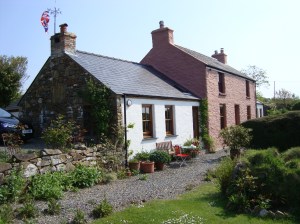
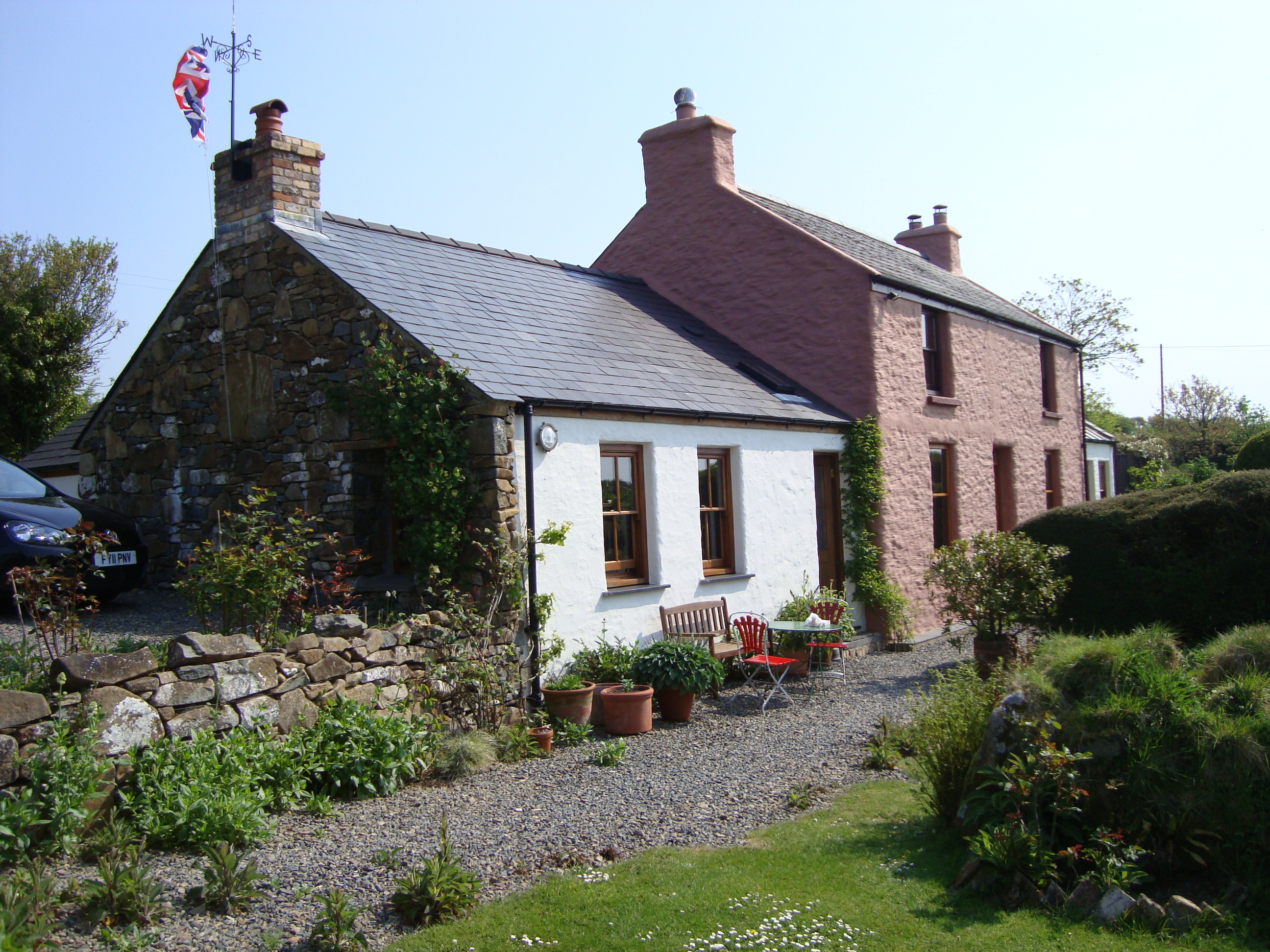
Fronhaul - Welsh retreat

Once there though, it was the amazing contrast to where we had come from and live in London that struck us.

Firstly it was the glorious sunshine and the flowers where we stayed – especially just outside the front of our little cottage in the mornings and early evenings.
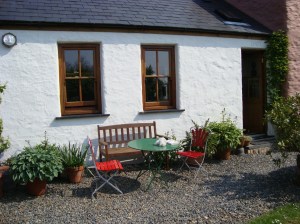
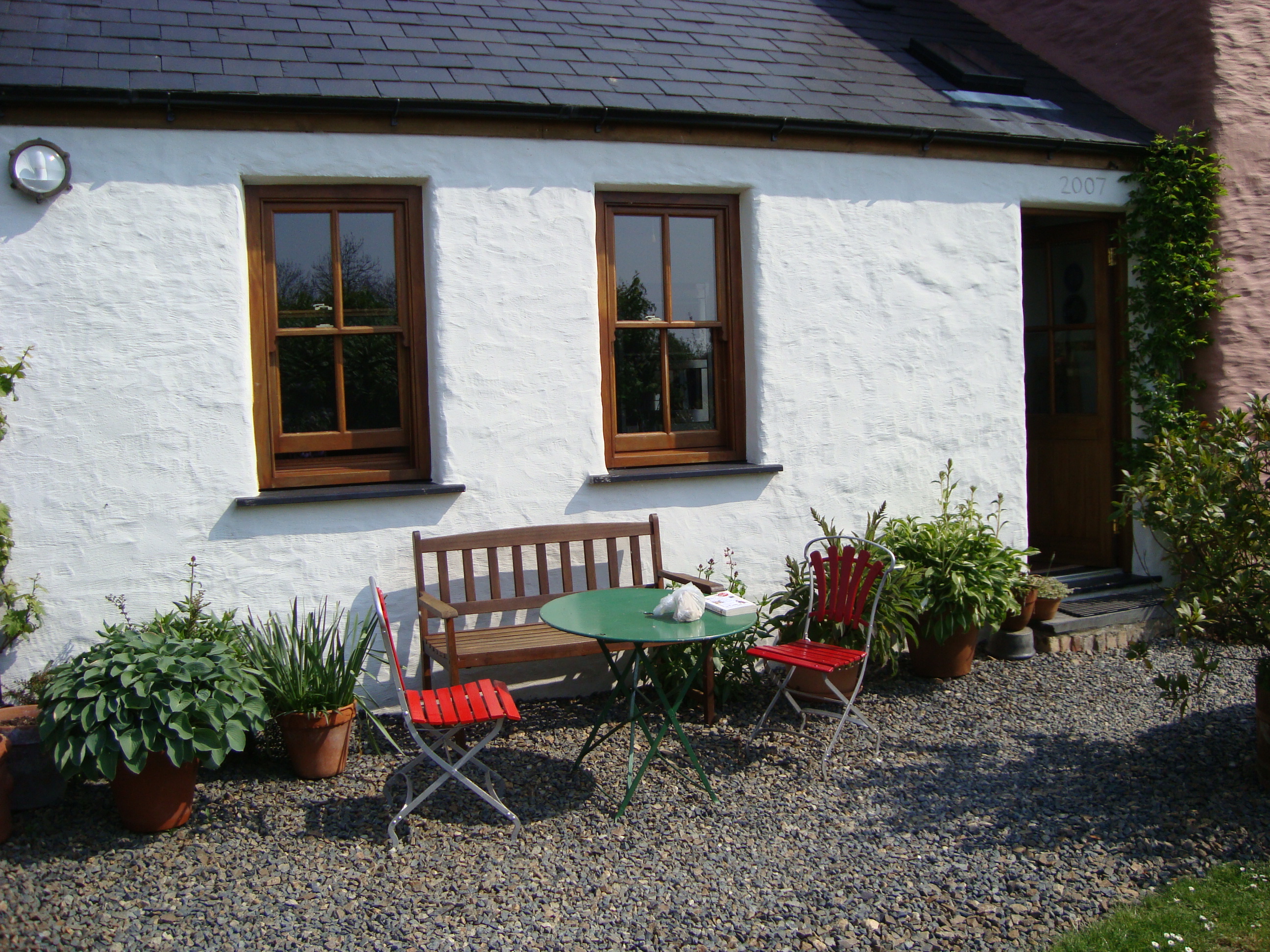
The front of our little cottage - where we had breakfast alfresco nearly every morning

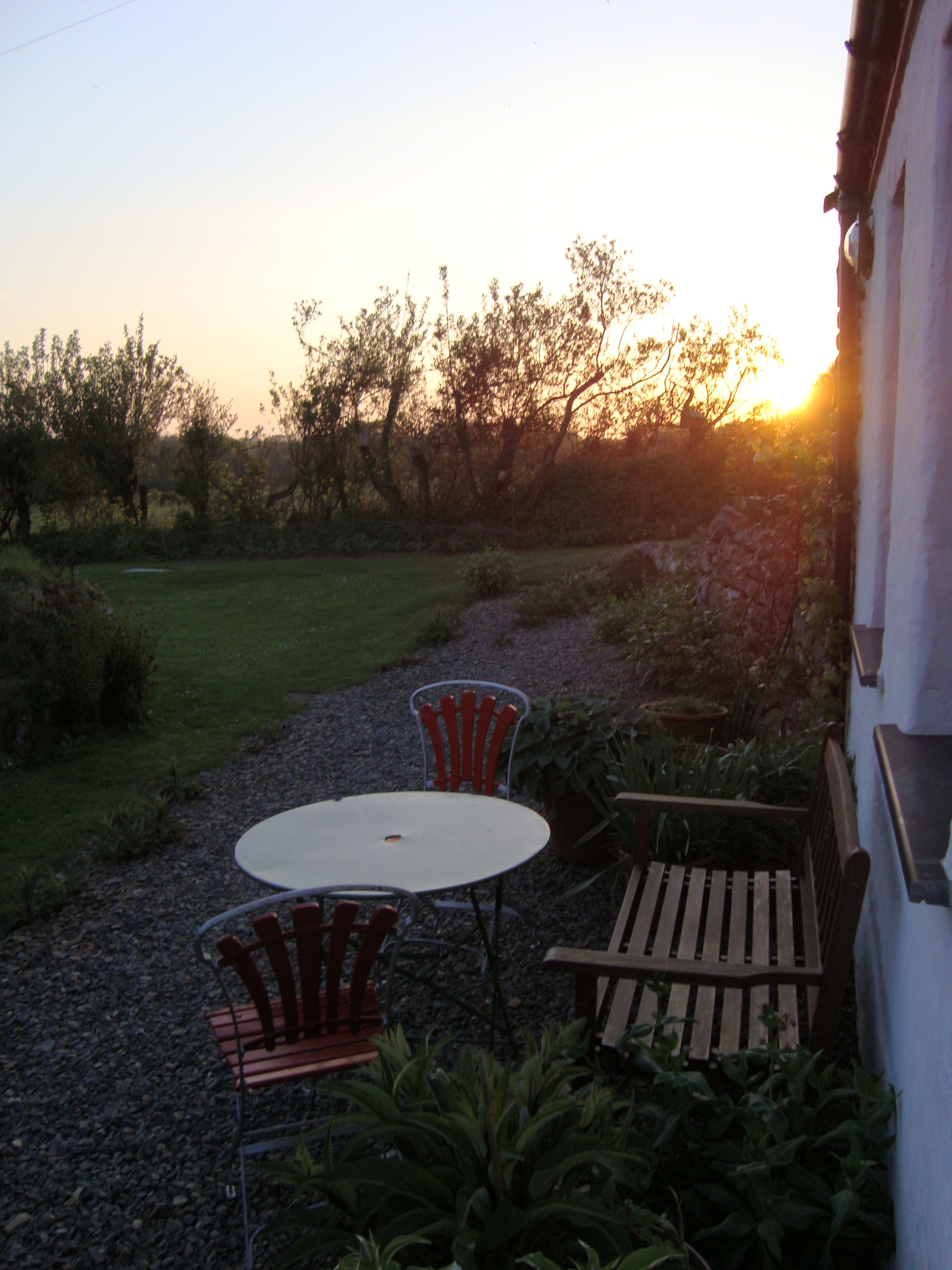
Early evening sun outside our front door. It was sunny all week and only a tad windy on some occasions - so who says that Wales has dismal weather?? We loved it!

Then it was with the only sounds being those of bumble bees in the day or the chorus of birds to wake us in the morning or tweet us to sleep in the evening.

In fact, it is not surprising that people go to bed early here, and get up equally early in the morning, as the daytime is what it is all about here.

It was amazing to think that it is only one day’s ride from London that one can be amongst such peace and tranquillity – and so far from the gladding crowd that was gathering to celebrate at t’other end of the highway.

Our host’s free range hens. Fortunately the rooster only crowed at 2pm in the afternoon!

So it is from here that I will blog a little, over the next week, about who and what I found there in South West Wales – sharing the snippet of a tale or two as I go – on what may well be the source of the real Camelot…

Posted in Camelot, Canterbury, Chaucer, Letterston, Little Newcastle, Pembrokeshire, Pilgrimages, Travel, Wales | Tagged , , , , | 2 Comments

Those Shaggy Tales: when and where did they begin and end?

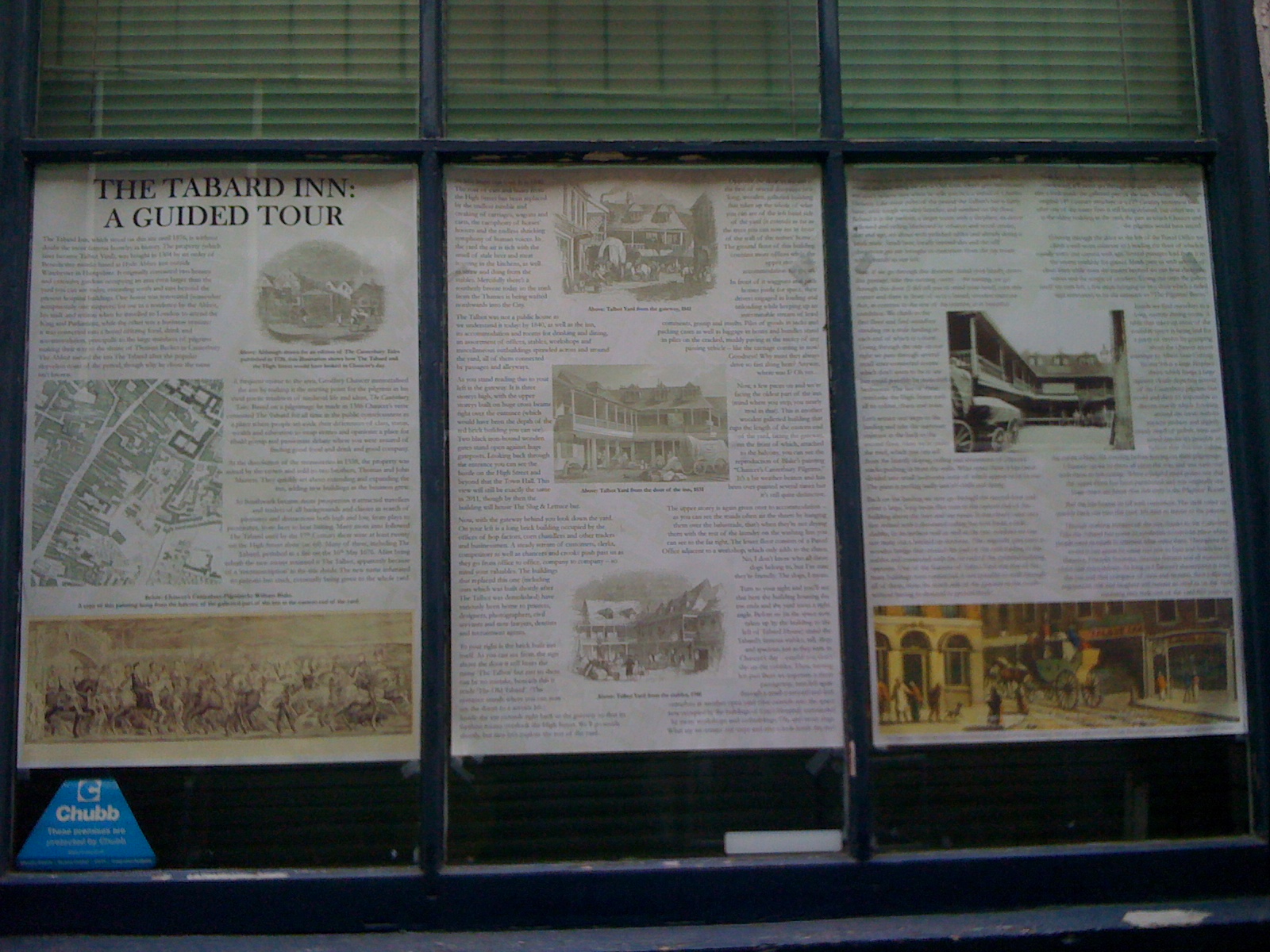
The Tabard Guided Tour - as seen in Copyprints' window, Talbot Yard, Southwark

A Brief Recap

Well, here’s where the tale of the trail and the tales properly begins – with an exploration into finding the original road to Canterbury, and then along to a trip to each stop-off with a few good friends sharing their tales of the modern day as well as views on what I’ve found so far.

My formal following of the Canterbury trail began back in 2007 when I decided that I had to first start to write things up about this.  At that stage I had received support from a goodly bunch of friends who I had emailed about this idea at the start of 2006. I had then found a media business in early 2007 who had agreed to pay me for publishing part of my story online with a view to testing interest in it.  So it seemed that I was off to a good start!

First Challenge:  How Long to Take and When to Start?

Initially I thought I ought to take the same road at the same time as when I had found it in 1991.  The problem is that the dates for Easter move around according a mix of lunar and solar cycles – and so, in the end, I just decided to go with whatever dates Easter fell for that year. 

Since then, thanks to Wikipedia, I have been able to determine that the dates that I first began my travels here in the UK were after Easter as, in 1991, Easter fell on the last day in March

Unfortunately the passport I had back then has long since expired, and been cancelled, so I cannot check back on exact dates I first arrived here – and I clearly never saw myself writing this up or otherwise I no doubt would have it with me. Still, it is somewhere in storage back in Sydney, as I am a perennial hoarder…

The main thing is that, as far as following in Chaucer’s footsteps goes, it is equally unclear what dates that fourteenth century pilgrimage was taken in, as it is unclear what year they started out. There is even debate over the number of days taken. Rather than rehash it all here, check out the following for a good article by an American University about the academic debate over it:  http://www.wsu.edu/~delahoyd/chaucer/CTplan.html

Fortunately I’ve decided that I do not have to be true to “this plan” for The Tales at all as, for me, it is more about the people you are likely to meet along the road and the feeling you get from taking it.  So one only has to be roughly true to the route of the road, with an emphasis on the feel of what it would have been like back then – but with how stories of the people of today might be likely to fit in with those from back then. Revelations and purification of the soul notwithstanding, of course! 😉

In The End, the date of The Beginning was…

Easter falling on April 8 in 2007 was the date I started on my pilgrimage – and so here’s where the first account of my present day tale begins, in recounting how I semi-formally found the road to take.

According to Wikipedia (which I did not really know about or use back then – but do now), this day means that the official day for Easter  was the same day in both Eastern and Western calendars.  I have no idea why this is significant yet, but it’s just a feeling I have that it is – and so let’s see where this latest trip goes in that regard, as the dates also collide this year too. Perhaps it means that its likely to find more Chaucerian travellers than usual – who knows?  Certainly that now seems possible since meeting the nanny from Slovakia, as stated in earlier blog, who knew and had a different view about The Tales…

Second Challenge:  even the places to stop off along the road are not very clear either!

Nothing was clear on the way to go from reading the Tales themselves, or at least from the annotated copy that I borrowed from the Kilburn Library back then (and I now have my own copy that seems much better). 

So I decided to approach things laterally, based on reading up on the explorer’s way of doing things. This pretty much entailed simply “following what feels right” and using a good bit of deductive reasoning.  It certainly beats relying on the inductive reasoning and hard core research of the historian and the archaeologist – which would otherwise take me years or even decades to find out when and where to go, stay and what to do when I get there. 

Indeed, I believe it already has taken the academics that long or longer!  Aye, so there’s even a tale with how I came by that way of discovering how to find the best way to explore and readily find out about things too – but that’s what you’d have to eventually buy my book to find out. he he. 😉

The upshot of the approach I worked out was one of a simple process of deduction. That it would take three days and nights, if the pilgrims were travelling 15 to 20 miles per day by either horse or foot, to go the 55 miles or so to Canterbury.  Then there was the convenience presented from staying at different coaching inns along the way, as Chaucer and his band were stated to have done – and which they would have known about in their day (but which we apparently don’t know about now!).  All this, starting off from The Tabard in Southwark – a pub and place that is, perhaps ironically compared with the rest of the journey, clearly stated and documented. It seems like good product placement by the landlord of The Tabard!  So maybe the others wouldn’t cough up….

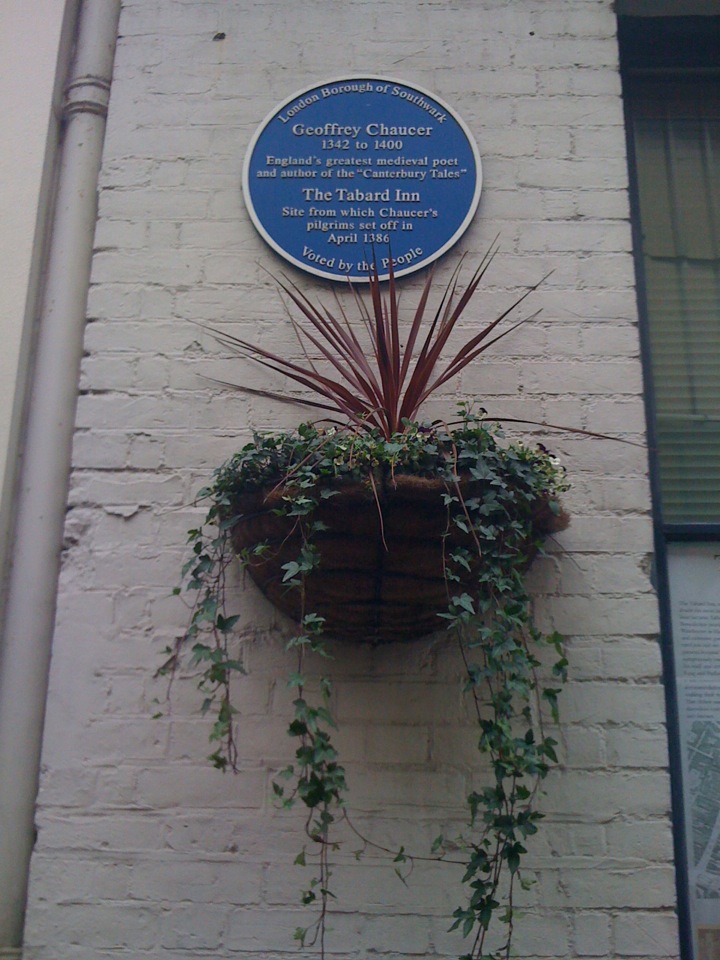
Today, a plaque marks where The Tabard originally stood - and The Tales began

Anyhow, after leaving Southwark, I went to see what I could find in three pleasant stops along the road within about that distance.  I ended up choosing Greenwich, Dartford and Canterbury as stop-offs, and based on what I could find out about coaching inns from a few guide books and enquiries at local tourist offices – and chats in a few pubs too, such as The George Inn.  Sadly, the staff behind the bar at The George were not much help at all back in 2006, nor in 2007. And, no, I was not savvy about the idea of promotion back then – but maybe I should head back there now? 😉

The George Today, 2011

Greenwich was closer and more of an instinctive stop, based on a few indicators in The Tales – but I will come on to that in a later blog, depending on the different views on that which I will share with my fellow travellers and pilgrims on the journey this time around, as well as what they think as fellow explorers.

Coaching on the Coaching Inn

Sadly, the only place I found that still had a coaching inn even closely approximating what Chaucer and his mates would have stayed in was at Dartford, a town in Kent and on the outskirts of London. Rochester, also in Kent, had the remnants of a coaching inn too – but it was nowhere near old enough nor did it have the same history.

So it was to Dartford, and a pub called the Royal Victoria and Bull, that I looked for the most genuine experience of a coaching inn. 

Even there I was surprised to find that this pub too was not necessarily the original – but that at least a pub had stood there on the road since medieval times.  The interesting thing about the pubs in Rochester and in Dartford is the connection with Queen Victoria – and the fact that both are called the Royal Victoria and Bull.  It seems more likely that the Dartford one is the original due to the claim that the pub there changed its name as a result of the young Queen Victoria stopping off there in 1838.

This story has since been stated in the Dartford Borough Council’s news online back in November, 2009 – and so I sure hope that they didn’t just take mine or the landlord’s word for it from what I found from chats around the traps back then! 

Anyhow, it is that fact that confirms I was probably in the right place and on the right track back then.

So ’tis there that I suggest another travellers’ night out is scheduled, some time in the near future, where we can experience something akin to the true Chaucerian coaching inn.    

Of course it is worthwhile checking out what I discovered at the other places too, following whoever comes along to meet up with me there.

My concern though is that there’s so much that the village and town of Greenwich and Canterbury like to do to cash in on the “two wrist pound” that I think it is best to get a few views on what is most likely to be the truth about it all before heading back to either place. 

So I look forward to thoughts on comments on this first step back along that road that I’ve less travelled – and to sharing more tales of the travellers and pilgrims of the modern day at a truly classic English pub, somewhere along the road to Canterbury.

Postscript

I do wonder  – given Chaucer deliberately did not state what the exact stop-offs were, apart from The Tabard, how much he intended that it should not matter what route you take and where you stop off as much as appreciate what you feel and experience along the way, as well as who you meet and what they have to say!

A picture in a printers' window tells the story of The Tabard

Posted in Canterbury, Chaucer, Dartford, Greenwich, Pilgrimages, Rochester, Southwark, Travel | Tagged , , , | 2 Comments

The Gardener’s Tale

Once upon a time a saying was invented that “every Englishman’s home is his castle” and set in motion a trend in that country that everyone has a right to a place that is protected and respected, so that they can safely call it “home”. 

Sadly, not everyone’s home here can have a garden with a Henry Moore sculpture like Hatton House, as has been so beautifully blogged about by one of my fellow travellers – a local London tour guide – whose tale I must tell soon along this way.  However it’s perhaps not necessarily for want of trying, as I discovered from this latest tale by another fellow traveller on her latest holiday and reasons for her journey here.

Twas lyrics from a piece of music that myself and this friend heard so beautifully played by Steve Young , at the Prince Alfred in Queensway last Sunday night, that set the scene. 

The lyric that set us to musing on what we seek beyond a regular holiday, or when we cannot properly take one, was from Snow Patrol’s song Chasing Cars and goes:

Forget what we’re told
Before we get too old
Show me a garden that’s bursting into life

Only a brief moment before this lyric was sung we had just started to talk about my friend’s staycation – something that she like many in this country may be doing now because they cannot afford to go abroad with the state of the British pound being so low, where once it was strong and allowed British residents freedom to travel anywhere (assuming they could gather enough pounds and time to do that, of course).

The relevance of this car-chasing lyric is that her local escape is not just to a place somewhere else in the UK .  It’s to an allotment just up the road from where she lives, and where she is creating her own unique little space growing some vegetables as well as erecting her own greenhouse with tomatoes as well as garlic, peppers and chilli. 

The Gardener and The Greenhouse to be

Indeed, LOTS of garlic from the sounds of it. 

“So no vampires”, I remark, “and potential for making pizza”

Stumped? Not this lady!

The incredible thing is that she is doing it all on her own, even down to removing massive tree stumps to make way for soil and seeds to be sown!  I tell you, these South African women (as that is where she is from) are quite Amazonian, as well as amazing in what they can achieve when they set their minds to something. She is certainly not the first South African girl that I have been impressed with in terms of singlehanded feats achieved – and am sure she will not be the last.


It was at this point in discussion that the next part of the song chimed into the discussion with:

We’ll do it all
Everything
On our own

We don’t need
Anything
Or anyone

My curiousity was with why she felt the need to “do it all” herself, as the song had echoed. She told me that it was due to a “need to learn things”. 

“Back in South Africa”, she continued, “everyone is told that they ‘have to get a job’, ‘get a home’, and so on. So to discover and do things outside of this are limited”

Again, the song – or is it Snow Patrol – seem to agree with this, almost saying the words that she can’t seem to say:

If I lay here
If I just lay here
Would you lie with me and just forget the world?

Why come all this way around the world though, and then make a garden in one’s holiday break?  Clearly she is not just going to lie there, in that allotment.

As the lyrics go: "If I lay here, what if I lay here? Show me a garden...."

“At the end of it, I see myself sitting in the greenhouse with a chair and knowing its my own”

“Just you alone?”

“No, of course we’d have a barbecue there once it’s all done”

The First Barbecue at The Gardener's Residence

At this point, the guys – Steve Young and his Kiwi mate Owen – start playing John Denver’s “Country Roads” song, and everyone joins in.  She goes into a reflective mood after this.

“We grew up with John Denver – and his music is what helped me dream of what I always wanted: to live in one place. We were always moving and, for some reason, it was especially the song Colorado Rocky Mountain High that made me dream of where I wanted to be.”  

“So where’s ‘home’ for you now then?”, I ask.

“I think that’s what I’m searching for, and maybe creating a little with this garden”

Wheelbarrow Pete

“What’s that?”, I ask – not sure if I have heard properly – especially as the musos are mashing up a medley now.

“To find ‘home'”, she replies…. 

Posted in London, Travel | Tagged , , , | 2 Comments